Al-Ummah Launches to Counter Disinformation, Bridge the Muslim World
DHAKA

In times increasingly swayed by geopolitical shifts, digital polarization, and a dire shortage of verified intellectual discourse, a new global move is attempting to bridge the gap between the Muslim world and international policymaking and strengthen knowledge cultivation, research, and constructive intellectual dialogue on a global scale.
On July 4, the Al-Ummah Foundation officially launched its multi-language journal and digital platform, “Al-Ummah,” at a high-profile ceremony in Dhaka. Operating in Bengali, English, Arabic, and Turkish, the platform positions itself as an international think-tank hub aimed at fostering research-driven dialogue, countering digital disinformation, and offering knowledge-based solutions to contemporary global challenges.
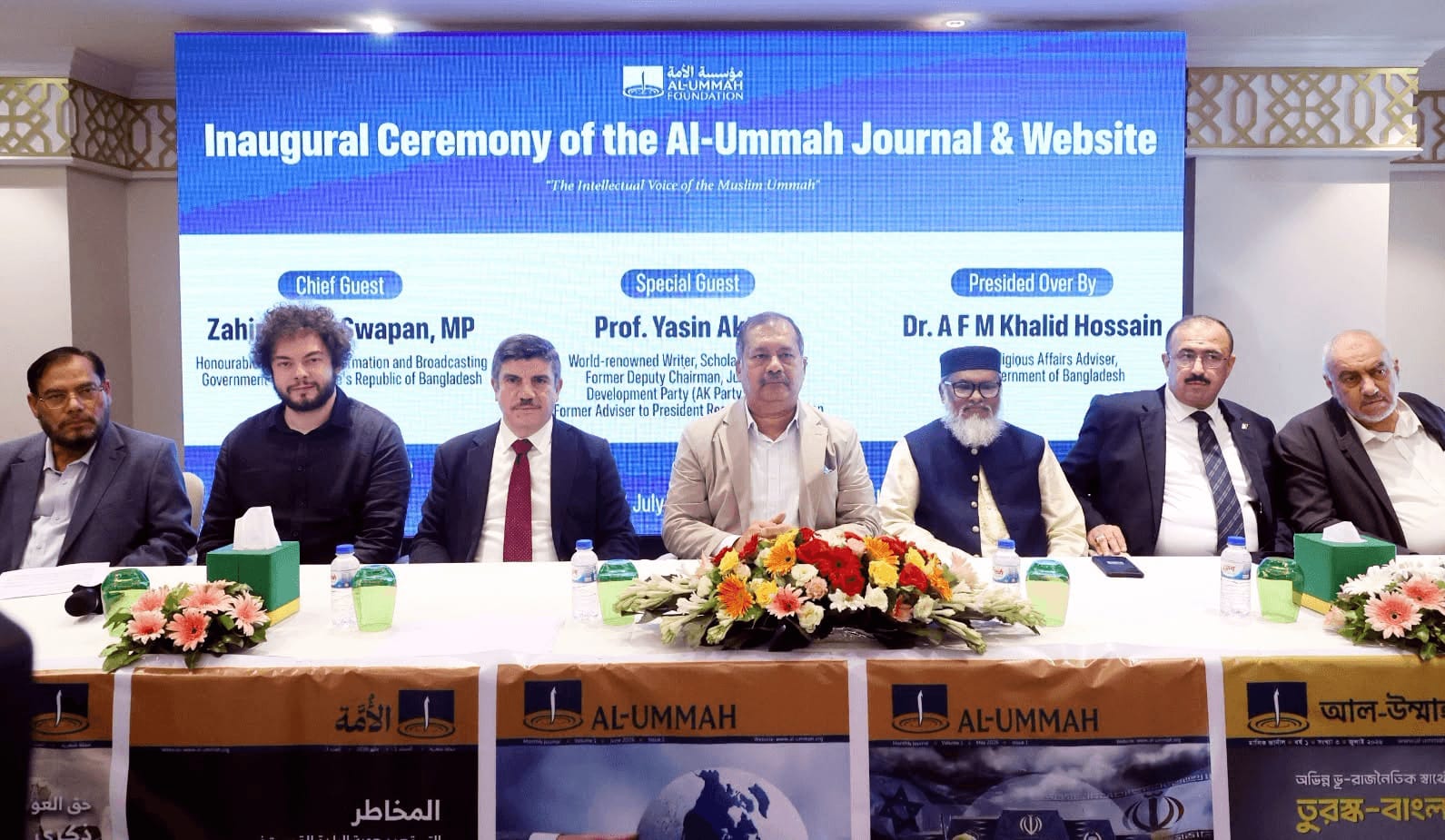
The debut comes at a time when analysts note a burgeoning demand for alternative intellectual platforms across the Global South—particularly those capable of translating academic research into actionable geopolitical, economic, and technological policy.
Al Ummah has emerged as an international platform for researchers, academics, policymakers, journalists, and young thinkers to discuss and exchange views on contemporary global issues, the challenges facing the Muslim Ummah, and knowledge-based solutions.
A Bulwark Against Digital Chaos
Speaking as the chief guest at the five-star venue launch, Zahir Uddin Swapan, Bangladesh’s Minister of Information and Broadcasting, emphasized that the digital age has democratized information at the cost of social cohesion.
“In the current digital era, while the free flow of information has created new possibilities, it has also increased the risks of confusion, misinformation, and social division,” Swapan warned. “In this situation, the need for credible intellectual initiatives built on the foundation of knowledge, morality, and responsible engagement is greater than ever before.”
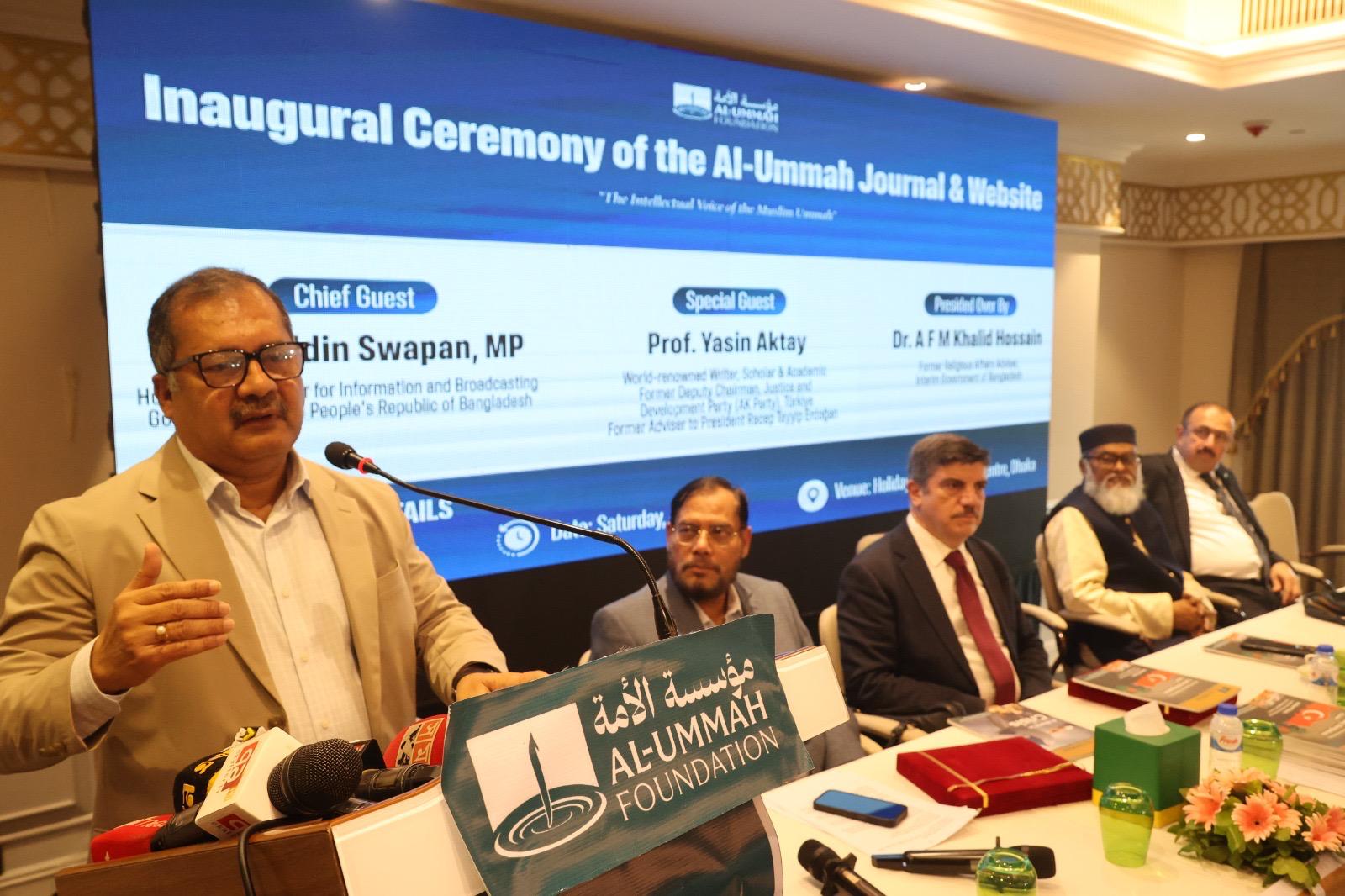
The Minister noted that while the world faces an abundance of data, there remains an acute scarcity of reliable, nuanced analysis. He considered Al-Ummah as a potential vehicle for “establishing a knowledge-based dialogue between Bangladesh and the world,” arguing that sustainable development hinges on a culture of coexistence despite differing viewpoints.
“Al-Ummah will play a positive role in achieving that goal,” the Minister added.
Bridging Heritage and Modern Policy
Special guest Professor Yasin Aktay, a prominent Turkish academic and former advisor to President Recep Tayyip Erdogan, highlighted the event’s global importance.
Underlining the systemic disconnect between the historical intellectual heritage of the Muslim world and its current global realities, he said: “One of the biggest challenges for Muslim society in today's world is to create an effective bridge between knowledge, research, and practical policymaking.” Aktay suggested that the platform could mobilize a new generation of researchers and young intellectuals to build a more united, conscious society through strategic, truth-based collaboration.
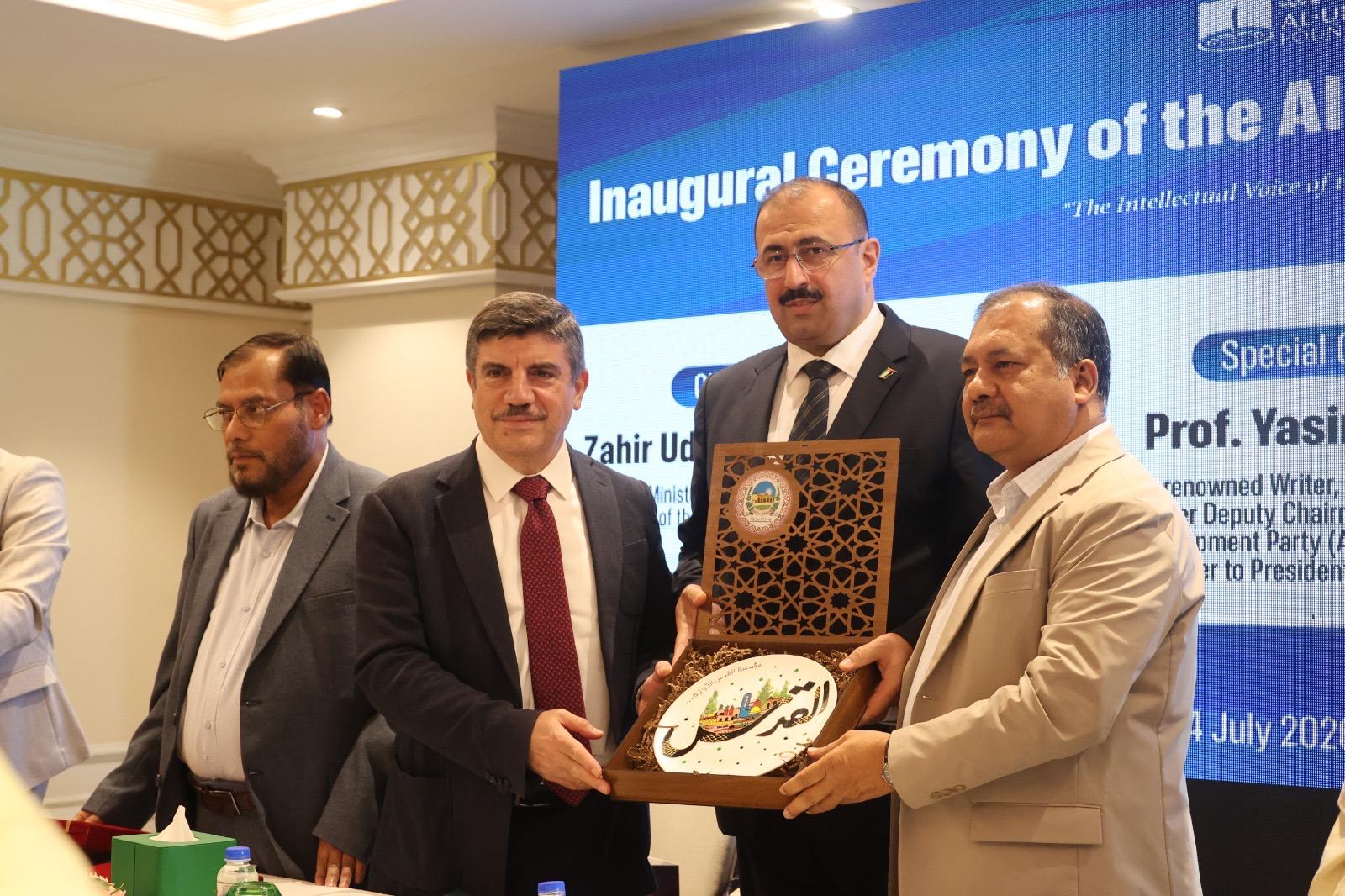
Speaking about Al-Ummah, Professor Aktay said such initiatives can make important contributions to building a conscious, united, and intellectually enriched Muslim society based on truthful knowledge cultivation, intercultural dialogue, and cooperation.”
“For centuries, Muslim civilization has made significant contributions to knowledge, philosophy, science, and human thought. However, in contemporary global realities, the effective connection between that heritage and the current generation needs to be strengthened further,” Aktay elaborated.
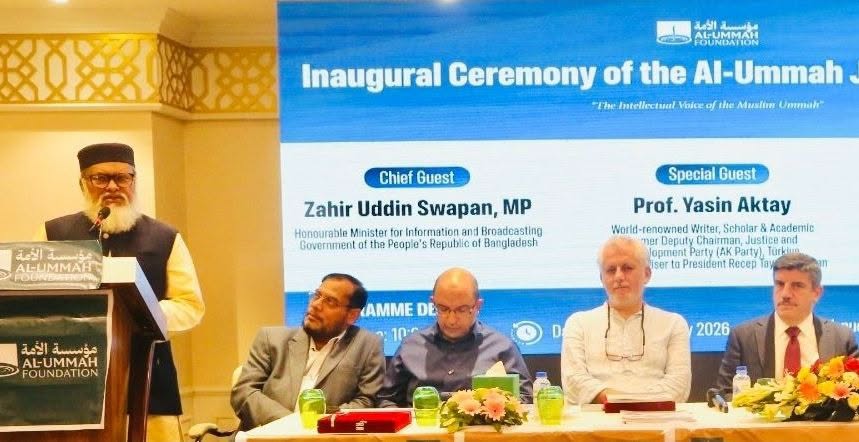
Dr. A F M Khalid Hossain, former Religious Affairs Advisor to the Interim Government of Bangladesh, presided over the event. He noted that navigating political, economic, and AI-driven technological shifts requires “knowledge-based leadership.”
He said, “There is no alternative to knowledge-based leadership and responsible research to overcome these challenges.”
Beyond Emotion: A Pragmatic Agenda
Mohammed Zakir Hossain, Chairman of the Al-Ummah Foundation and Editor-in-Chief, took the occasion to make it clear that Al-Ummah is less about rapid ideological shifts and more about long-term intellectual influence.
“This initiative has been undertaken with the goal of strengthening the intellectual voice of the Muslim Ummah. We do not claim to change the world overnight. We believe that permanent and positive change begins through knowledge, constructive dialogue, and responsible journalism,” he said.
“We do not claim to change the world overnight,” said Zakir Hossain. “We believe that permanent and positive change begins through knowledge, constructive dialogue, and responsible journalism. Our goal is to inspire the new generation of thinkers... to contribute to the positive transformation of society.”
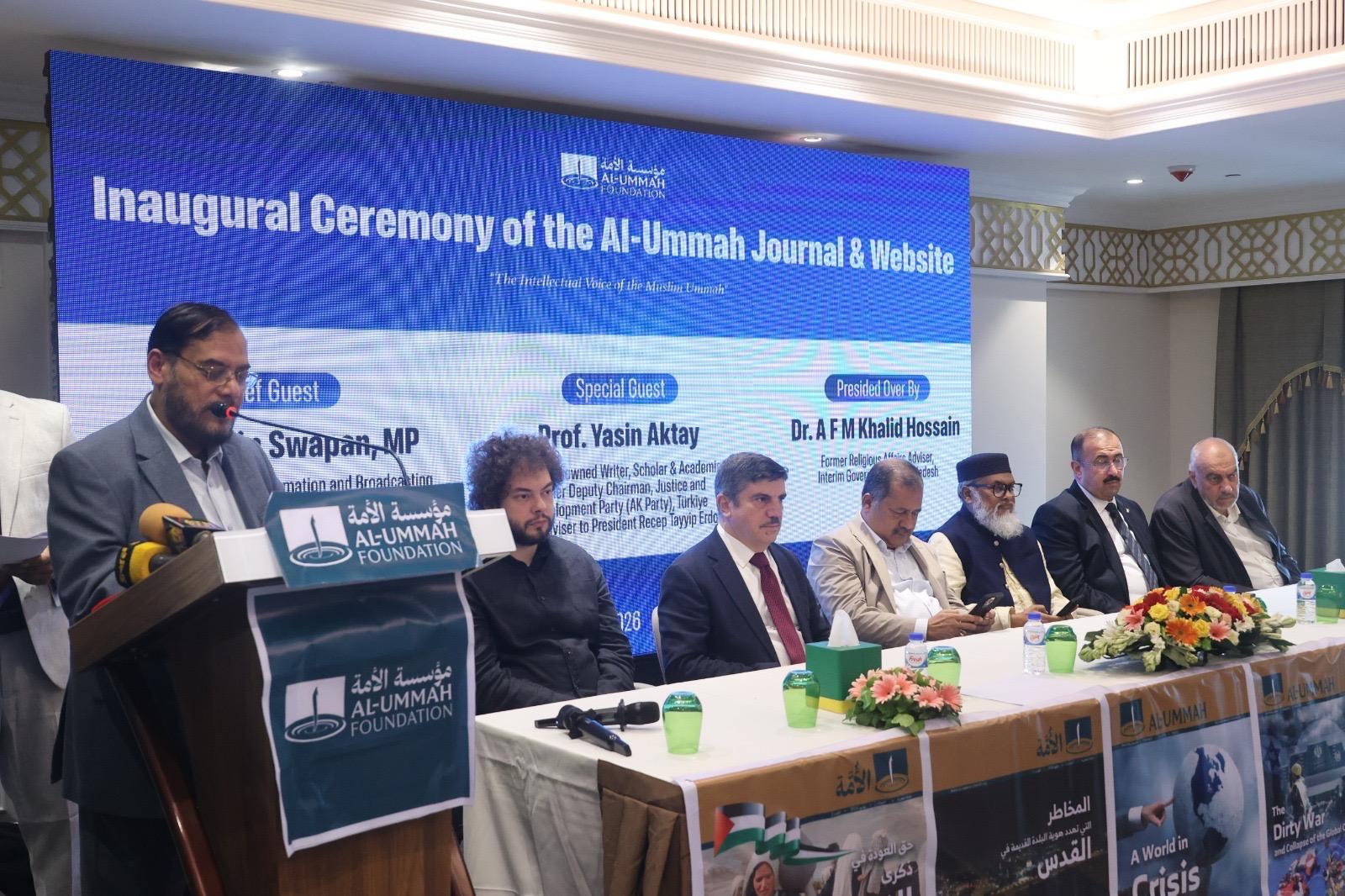
He said, “Al-Ummah is a platform that will strengthen the intellectual voice of the Muslim Ummah through research, meaningful discussion, and knowledge exchange. Our goal is to inspire the new generation of thinkers, writers, and researchers so that they can contribute to the positive transformation of society with wisdom, integrity, and human values.”
The launch drew an array of international policy experts, academics, and digital innovators, reflecting the platform’s broad operational mandate. Panel discussions covered a spectrum of modern anxieties, including:
The intellectual leadership of the Muslim world
The credibility of information in the age of generative artificial intelligence.
The modernization of educational frameworks in the Global South.
The growing footprint of Islamic finance and technology-driven knowledge production.
Strategic collaboration among Organisation of Islamic Cooperation (OIC) member states.
Key perspectives were delivered by international delegates, including Engineer Munir Said (Islamic World Forum for Thought and Civilization), Dr. Ayman Zeidan (International Al-Quds Foundation), and Dr. Fatih Abdul Qadir (Al-Rawad Academy, Istanbul), alongside local administrative figures such as Public Administration Reform Commission member Dr. Mohammed Ayub Miah and former Dhaka University Vice-Chancellor Professor Niaz Ahmed Khan. Editorial leaders Issam Shehadat and Rahmi Osman Kaçmaz also detailed the platform’s digital transformation roadmap.
Analysts believe that research-based discussions on geopolitics, economics, technology, Islamic finance, education, and culture are becoming increasingly vital in international policymaking processes. Initiatives like the Al-Ummah journal and website can serve as an effective communication and knowledge-sharing platform among researchers, journalists, and policymakers in the Muslim world.
The speakers hoped that such an initiative will be able to build an inclusive, responsible, and intellectually enriched global network, which could turn into a major stage representing the thoughts and research of the Muslim world at the international level in the future.
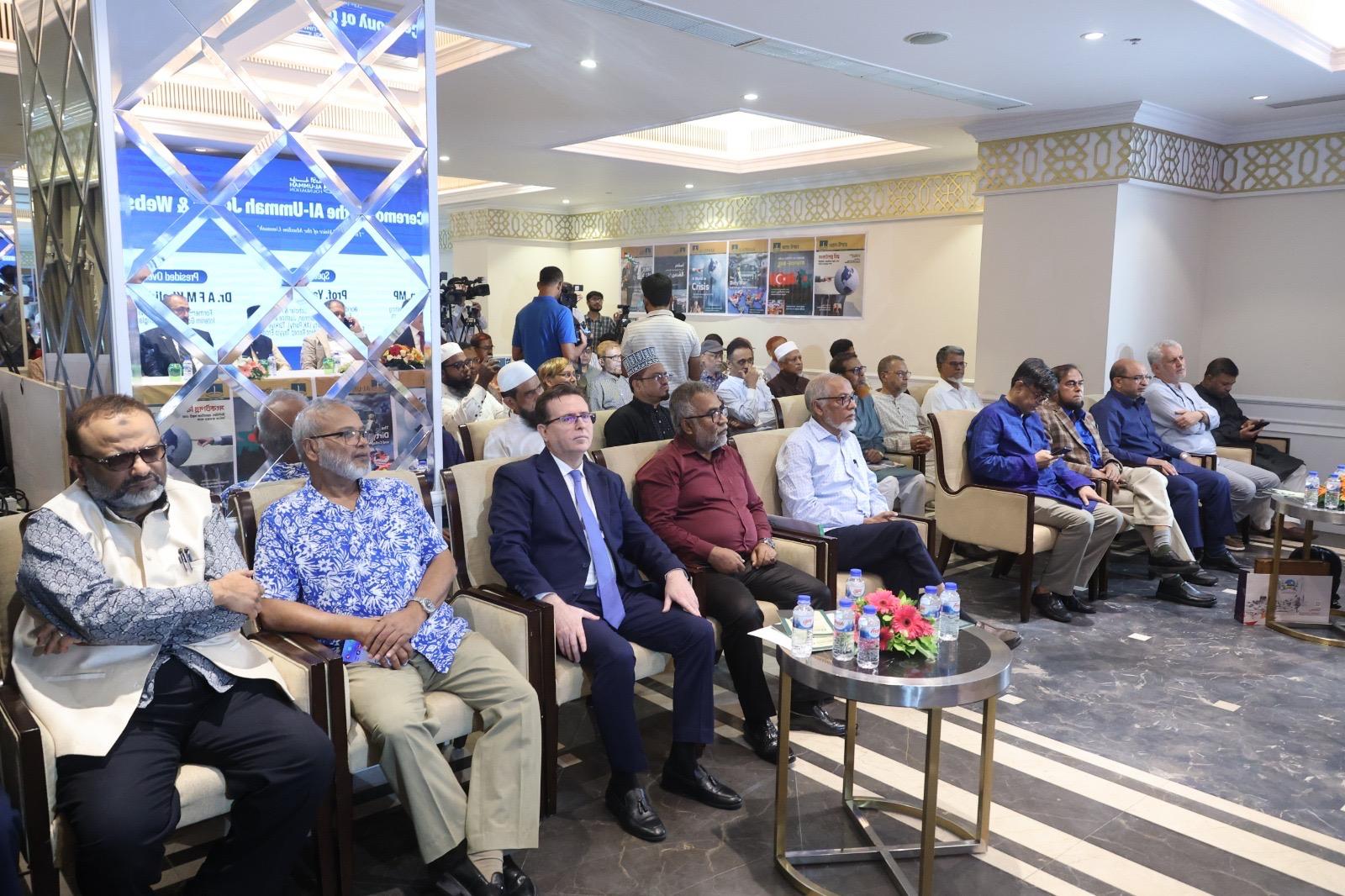
Speakers participating in the event highlighted the importance of building a knowledge-based society, the intellectual renaissance of the Muslim world, research collaboration, responsible media, and global dialogue. They stated that in today's world, sustainable development, peace, and intellectual leadership can only be established through the integration of knowledge, technology, and strategic cooperation.
The organizers stated that Al-Ummah has begun its journey out of the necessity to expand the scope of research-driven and intellectual discussions, rather than emotion-based ones, to tackle the political, economic, and cultural challenges of the Muslim world in the current world order. The journal aims to create new horizons for knowledge-based discussion by publishing research papers, analytical articles, policy papers, opinion pieces, and special reports on international affairs.
Currently, Al-Ummah is being published in four languages—Bengali, English, Arabic, and Turkish. According to the organizers, there are plans to add several more languages in the future to further expand knowledge exchange and intellectual cooperation among researchers and thinkers from different regions of the world. At the same time, this platform will also work to create strategic connections and knowledge-based cooperation among the member countries of the Organisation of Islamic Cooperation (OIC).
The Outlook
As regional think tanks increasingly influence international policy, Al-Ummah enters a competitive but vital space. Organizers confirmed plans to expand the platform into additional languages, aiming to build an inclusive global network that shifts the discourse surrounding the Muslim world away from reactive emotion and toward rigorous, peer-reviewed analysis.