Hakan Fidan’s Landmark Visit Opens New Strategic Era in Bangladesh-Turkey Ties
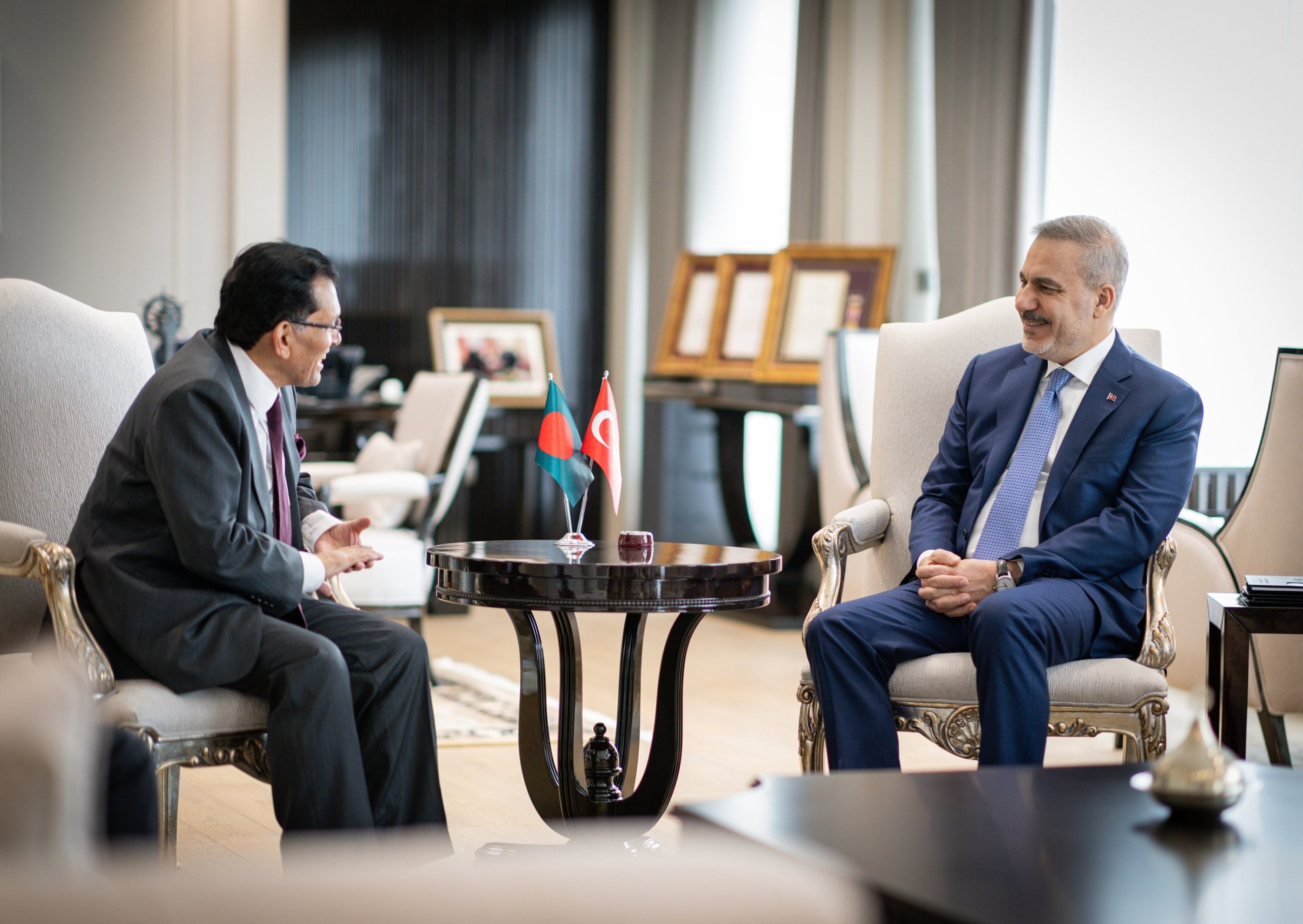
Turkish Foreign Minister Hakan Fidan’s three-day visit to Dhaka marks a bold new chapter in Bangladesh–Turkey relations and signals a clear move toward a new strategic level in bilateral ties. As the first visit by a Turkish foreign minister to Bangladesh in nearly six years, this goes far beyond routine diplomacy. It represents a forward-looking push to elevate bilateral ties amid the shifting geopolitical realities of South Asia, the Middle East, and the broader Indo-Pacific region.
In the current international order, strategic cooperation among middle powers is becoming increasingly important. On one hand, Bangladesh is determined to strengthen its position through rapid economic growth, regional connectivity, and active global diplomacy. On the other hand, Turkey, under the leadership of Recep Tayyip Erdoğan, has established itself as an independent and influential global power connecting Europe, the Middle East, Africa, and Asia. Against this backdrop of mutual ambition, Hakan Fidan’s visit has opened a new horizon of shared interests and multidimensional cooperation between the two countries.
New Opportunities in Trade and Economic Cooperation
Current bilateral trade between Bangladesh and Turkey stands at approximately $1.35 billion. Both countries have jointly set a goal of increasing this figure to $2 billion in the near future. While ready-made garments, textiles, leather products, and agricultural goods have long formed the foundation of bilateral trade, this round of discussions focused on high-value-added industries, information technology, pharmaceuticals, infrastructure development, and renewable energy.
Bangladesh is currently making its final preparations for graduation from Least Developed Country (LDC) status. As a result, the need to create new markets, attract foreign direct investment (FDI), and establish technological partnerships has become increasingly urgent. In this regard, Turkey’s advanced manufacturing sector, defense industry, and world-class infrastructure expertise could serve as important catalysts in Bangladesh’s economic transformation.
Moreover, ongoing discussions regarding a possible Free Trade Agreement (FTA) or Preferential Trade Agreement (PTA) could provide a legal and institutional framework for economic relations between the two countries. If successfully implemented, such an initiative could serve as a strong economic bridge between South Asia and West Asia.
Defense Cooperation: The Most Important Dimension of the Relationship
The most dynamic and widely discussed aspect of Bangladesh–Turkey relations is defense cooperation. Over the past decade, Turkey has emerged as one of the world’s leading and fastest-growing producers of defense technology. In particular, its success in drone technology (such as the Bayraktar TB2), modern armored vehicles, naval platforms, and advanced military equipment has gained global recognition.
Bangladesh, through its military modernization program known as “Forces Goal,” is also prioritizing enhanced defense capabilities and technological advancement. In this context, defense cooperation between the two countries is no longer limited to conventional arms sales. It is increasingly evolving into strategic collaboration involving joint production, technology transfer, and advanced training for military personnel.
According to military experts, Turkey represents a highly reliable partner for Bangladesh. Turkish defense technology is not only cost-effective and battle-tested but is also generally free from the geopolitical conditions often associated with Western suppliers. Consequently, defense cooperation between Dhaka and Ankara is likely to expand significantly in the coming years.
Rohingya Crisis: A Shared Humanitarian Position
One of the most significant aspects of Hakan Fidan’s visit was his tour of the Rohingya refugee camps in Cox’s Bazar. Turkey has been among the most vocal and active Muslim-majority countries advocating for the Rohingya issue on the international stage from the very beginning. Through forums such as the United Nations and the Organisation of Islamic Cooperation, Ankara has consistently supported the protection of Rohingya human rights and their safe and dignified repatriation.
Bangladesh currently hosts more than one million displaced Rohingya refugees, placing considerable pressure on its economy, environment, and internal security. In this situation, the direct political and humanitarian support of an influential country like Turkey strengthens Bangladesh’s diplomatic position globally. Fidan’s visit to the camps was not merely symbolic; it served as a powerful political message aimed at renewing international attention to the Rohingya crisis.
Multilateral Diplomacy and Global Coordination
Both Bangladesh and Turkey place great importance on multilateral diplomacy and respect for international law. Their cooperation and policy alignment are becoming increasingly visible across platforms such as the United Nations, the OIC, and the Developing Eight Organization for Economic Cooperation.
The two countries share similar perspectives on issues such as sustainable development, climate change, refugee crises, food security, and the rights of countries in the Global South. In an increasingly polarized world, where competition among major powers continues to intensify, emerging middle powers like Bangladesh and Turkey are seeking to amplify their voices in global decision-making through closer coordination.
Indo-Pacific & Geopolitical Context
The significance of this visit extends beyond bilateral relations and carries a broader regional geopolitical dimension. Bangladesh currently pursues a balanced and neutral foreign policy, maintaining constructive relations with the United States, China, India, the European Union, and Middle Eastern countries.
Turkey similarly follows an independent and multidimensional strategic foreign policy. While Ankara remains an important member of the North Atlantic Treaty Organization, it is simultaneously expanding its strategic influence across the Middle East, Africa, Central Asia, and South Asia. As a result, the Bangladesh–Turkey partnership provides both countries with an opportunity to diversify their diplomatic engagements.
The growing geopolitical importance of the Bay of Bengal and the wider Indo-Pacific region is also likely to encourage greater Turkish engagement in the area, thereby broadening Bangladesh’s network of international partnerships.
Future Outlook
Foreign Minister Hakan Fidan’s visit to Dhaka demonstrates that Bangladesh and Turkey are no longer confined to a relationship based solely on historical friendship and cultural affinity. The two countries are moving toward the establishment of a defined Strategic Partnership, centered on economic cooperation, defense, technology, and humanitarian diplomacy.
However, realizing this promising vision will require more than diplomatic goodwill or joint declarations. Concrete projects must be initiated quickly, the investment climate must be further improved, institutional frameworks for defense cooperation must be established, and commercial agreements must be implemented efficiently.
If this roadmap is successfully executed, Bangladesh–Turkey relations could evolve over the next decade into one of the most influential and exemplary strategic partnerships in the geopolitics of South Asia and West Asia.