Turning the Tide: Repositioning Bangladesh’s Economy
Turning the Tide: Repositioning Bangladesh’s Economy
Bangladesh enters 2026 at a critical juncture. After more than a decade of impressive headline growth, the economy now confronts deep structural vulnerabilities exposed by the Government’s White Paper (2024) on the State of the Bangladesh Economy. This comprehensive document reveals not isolated problems but a tightly interconnected web of institutional erosion, governance failures, fiscal fragility, banking distress, and climate risks that together threaten macroeconomic stability and social cohesion.
Economic Reality: A Moment of Reckoning
Public debt has risen sharply as persistent budget deficits, inefficient public investment, and weak domestic revenue mobilization have taken their toll. The tax-to-GDP ratio has stagnated, undermined by generous exemptions for narrow interest groups, weak enforcement, and widespread leakage in customs and VAT administration. Debt servicing now crowds out vital spending on education, health, climate adaptation, and social protection, severely limiting the government’s ability to respond to shocks.
Inflation remains elevated, driven by exchange-rate adjustments, energy price distortions, supply-chain inefficiencies, and market concentration. This burden falls heaviest on lower-income households, eroding real wages and threatening food security.
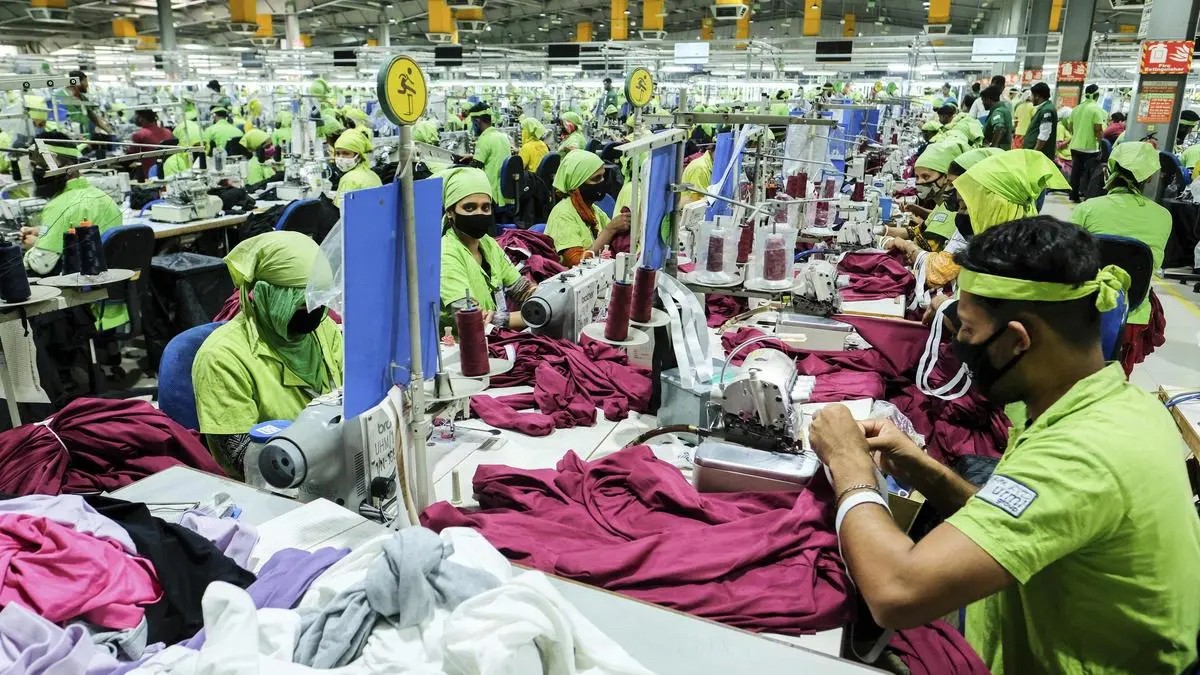
Externally, foreign exchange reserves are vulnerable due to heavy dependence on garment exports, slow diversification, volatile remittance flows, and reliance on imported energy. Inconsistent foreign exchange management and administrative controls have further eroded investor confidence.
The financial sector represents the most immediate systemic risk. Non-performing loans have reached alarming levels, fueled by politically connected lending, weak credit appraisal, inadequate provisioning, regulatory forbearance, and compromised governance. Many banks are technically insolvent, undermining depositor confidence and constraining credit flows to productive sectors. Illicit financial flows—through capital flight, trade misinvoicing, and regulatory arbitrage—have drained domestic savings and weakened currency stability.
Despite past growth, employment pressures are mounting. Youth unemployment, underemployment, informality, and skills mismatches are rising, while female labor force participation remains constrained by safety, childcare, and cultural barriers. Income inequality has widened, reflecting asset concentration and urban-centric development patterns. Social protection systems remain fragmented and poorly targeted, and progress in education, health, and nutrition remains uneven.
Bangladesh is among the world’s most climate-vulnerable nations. Flooding, cyclones, salinity intrusion, groundwater depletion, and urban air pollution impose mounting fiscal, health, and productivity costs. Weak integration of climate risks into public investment planning and fragmented financing channels limit adaptation capacity.
Most damaging of all is the erosion of institutions: corruption in procurement, land acquisition, banking, and state-owned enterprise management; politicized statistics; and constrained media and civil society oversight. Rebuilding trust and credibility is not a secondary concern—it is the very foundation of sustainable recovery.
Why the Growth Model Must Change
The previous growth model—centered on capital-intensive infrastructure, debt-financed expansion, and administratively driven investment—delivered rapid GDP growth but at diminishing returns. Megaprojects frequently suffered cost overruns, governance leakages, and weak economic returns, crowding out small and medium enterprises (SMEs) and generating low employment elasticity.
With rising debt burdens, reduced access to concessional finance after LDC graduation, and mounting employment pressures, Bangladesh must shift decisively toward labor-intensive, productivity-led growth. The new paradigm prioritizes jobs before concrete, productivity before prestige, governance before scale, climate resilience before short-term expansion, and inclusion before concentration.
A Strategic Roadmap for Reform
Restoring financial stability must be the immediate priority. Supervisory independence must be strengthened, non-performing loan resolution accelerated, provisioning standards tightened, and recapitalization pursued with strict governance conditions. Over the medium term, domestic bond and sukuk markets should be deepened to diversify financing channels and reduce excessive reliance on banks.
Job creation must become the central objective. A national employment strategy should target 2.5–3 million jobs annually through rural transformation, agro-processing, light manufacturing, leather goods, pharmaceuticals, halal exports, logistics, and digital services. A National Employment Guarantee Scheme can build climate-resilient rural infrastructure while stabilizing incomes. SMEs require predictable access to finance, industrial clusters with shared facilities, and incentives explicitly tied to job creation and formalization.
Climate resilience must be mainstreamed as core economic infrastructure. Green sukuk, blended finance, and municipal bonds can mobilize long-term capital for flood protection, renewable energy, water management, and urban electrification. Banking supervision should incorporate climate stress testing, while public investment integrates resilience screening.
Governance reform constitutes the invisible backbone of sustainable growth. Digital procurement systems, open contracting, independent audits, judicial modernization, and performance-based management of state-owned enterprises are essential to reduce corruption and improve efficiency. Statistical independence and open data platforms will restore policy credibility.
Ethical and Islamic social finance instruments—digitized zakat platforms, professional waqf management, and qard hasan funds—offer powerful complements to fiscal capacity. When governed transparently, they can mobilize an estimated BDT 150–200 billion annually for education, health, housing, and micro-enterprise support.
A Disciplined Path Forward
Reform must follow realistic sequencing. The first phase (2026–2027) should focus on banking cleanup, inflation control, anti-corruption actions, and quick governance wins to rebuild credibility. The second phase (2028–2031) should scale SME finance, industrial clusters, climate infrastructure, and regulatory capacity. By the third phase (2032–2036), Bangladesh can position itself as an ethical finance and green investment hub with diversified exports and resilient systems.
Development partners should shift from fragmented project financing toward systemic institution-building: blended finance for SMEs, climate project preparation, supervisory technology, judicial modernization, and digital governance infrastructure. The Planning Commission must rebuild credibility through integrated medium-term investment frameworks, rigorous project appraisal, climate mainstreaming, and SOE reform. Media and civil society should monitor banking cleanup, procurement integrity, debt sustainability, social protection targeting, and anti-corruption enforcement to sustain accountability.
Conclusion
Bangladesh stands at a decisive inflection point. The White Paper (2024) has provided an unflinching diagnosis of systemic failures, yet the country retains powerful strengths: a dynamic population, entrepreneurial spirit, digital penetration, and resilient civil society.
Sustainable recovery demands more than stabilization—it requires repositioning toward inclusive, employment-intensive, climate-resilient, and ethically grounded growth. By prioritizing financial integrity, labor-absorbing transformation, governance renewal, climate alignment, and complementary social finance, Bangladesh can convert this crisis into a foundation for shared prosperity.
The opportunity window is narrow, but with disciplined leadership, transparent institutions, and strategic partnerships, the country can emerge stronger, more diversified, and globally competitive. The coming decade will determine whether Bangladesh realizes its demographic dividend or slips into a middle-income trap of inequality and fragility. The pathway forward is clear—now is the time for resolute action.