Timothy Winter: A Scholar Bridging Islamic Tradition and Modern Britain
Timothy Winter: A Scholar Bridging Islamic Tradition and Modern Britain
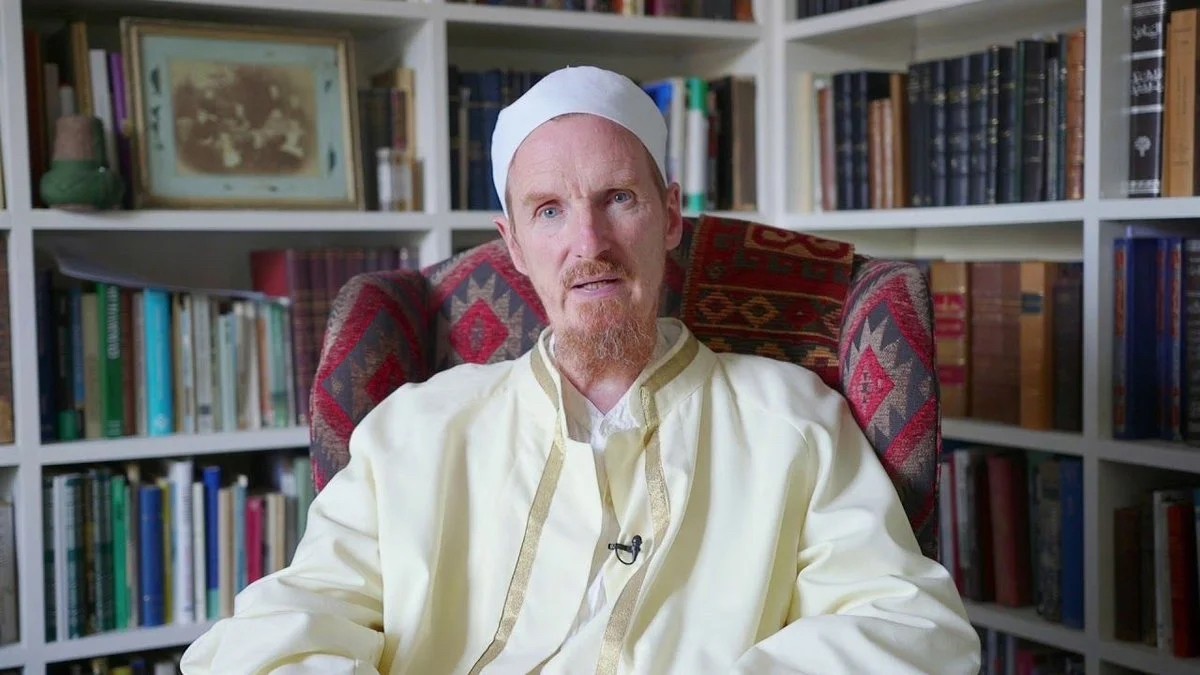
Shaykh Abdal Hakim Murad, formerly Timothy John Winter, is a respected Muslim intellectual in Britain. His impact is seen in advancing Muslim scholarship through education, fostering interfaith dialogue, and shaping discussions of Islamic spirituality and tradition in the West. He inspires students as a professor of Islamic Studies at the University of Cambridge. He serves as a fellow at Wolfson College and founded Cambridge Muslim College.
Early life and education
Winter was born in London in 1960. He studied at Westminster School and later entered Pembroke College, Cambridge. There, he graduated with a double first in Arabic. His early academic training created a strong foundation in language, literature, and religious studies, but his intellectual curiosity soon led him beyond the university classroom, exploring perspectives that would shape his ongoing journey.
After Cambridge, Winter immersed himself in Islamic studies across the Muslim world. His journey took him from Al-Azhar in Cairo to Saudi Arabia and Yemen, forging bonds with traditional scholars. Later, he pursued Turkish and Persian at the University of London and deepened his research on Islamic history and theology. This fusion of Western academic rigor and classical scholarship gave him a unique voice.
He speaks several languages and works with classical Arabic texts. He bridges academic language and traditional scholarship for English-speaking Muslims.
Academic and professional work
Winter is Shaykh Zayed Lecturer in Islamic Studies at Cambridge. He is Director of Studies at Wolfson College. Cambridge Muslim College lists him as founder and Chair of Trustees. These roles show his service as an academic and educator.
His publications and translations introduce readers to Islamic thought. He has edited and contributed to academic books on theology and translated Imam al-Ghazali’s Ihya’ Ulum al-Din. He often writes about Islamic orthodoxy, spirituality, Muslim-Christian relations, modernity, and the challenges Muslims face in Europe.
Winter has also worked with the Sunna Project at Cambridge, supporting Arabic editions of key Sunni hadith collections. He has contributed to public debates on religion, ethics, and society, including appearances on BBC Radio 4’s Thought for the Day and lectures abroad.
Conversion and spiritual outlook
Winter converted to Islam in 1979, adopting the name Abdal Hakim Murad. In interviews, he described his journey as a quest for deeper meaning beyond materialism, rather than a sudden break from his roots. As a young man, he felt captivated by religious questions, beauty, discipline, and the transformative power of worship.
His later scholarship reflects that search. Instead of limiting Islam to political or cultural identity, Winter inspires with his focus on worship, character, beauty, intellectual humility, and deep connection to tradition. This has helped him become influential among Muslims, aiming to embrace classical teachings while living confidently in modern Western societies.
Cambridge Muslim College
In 2009, Winter founded Cambridge Muslim College. The college was created to support a new generation of Muslim scholars, teachers, and community leaders who could understand both the Islamic tradition and the social realities of contemporary Britain. Its programs have sought to combine traditional Islamic learning with academic, pastoral, and civic training.
The college is a leading Islamic learning and research institution in the UK. Winter, founder and trustee, keeps education central to his mission. He shapes discussions on imam training, British Muslim identity, and the place of Islamic scholarship in modern society.
The Cambridge Central Mosque
One of Winter’s most visible public achievements is his role in the Cambridge Central Mosque. The mosque opened in 2019 and is widely described as Europe’s first eco-mosque. It can accommodate about 1,000 worshippers. It was designed as a British mosque for the twenty-first century, combining Islamic geometry and spirituality with English materials, gardens, and environmental responsibility.
The mosque’s sustainable features include natural lighting, low-energy LED lighting, photovoltaic cells, strong insulation, natural ventilation, heat-pump technology, rainwater and greywater harvesting, bicycle facilities, and extensive green space. Its near-zero-carbon design has made it a landmark not only for the Muslim community in Cambridge but also for wider conversations about faith and environmental stewardship.
Winter, who chairs the Cambridge Mosque Trust, has presented the mosque as more than a prayer space. It is also a public symbol of how religious architecture can serve worshippers, neighbors, and the natural world simultaneously. Its gardens, cafe, lectures, and community activities have helped make it a meeting point for Muslims and non-Muslims alike.
Recognition and continuing influence
Murad is known for scholarship and public service, and is the recipient of the Pilkington Teaching Prize from the University of Cambridge. Listed in The Muslim 500, the annual publication that surveys influential Muslims worldwide. In the 2026 edition, The Muslim 500 lists Dr. Murad among the leading scholarly figures and records his recent ranks as 34 in 2025, 36 in 2024, and 35 in 2023, which demonstrates his influence. He shapes religious and academic life through his roles as academic specialist, translator, founder, lecturer, interfaith contributor, and guide to English-speaking Muslims. His work addresses urgent questions: preserving religious depth, educating future Muslim leaders, institutional integrity, and making faith a source of mercy, beauty, and responsibility.
Timothy Winter’s life traces the arc of a British scholar’s embrace of Islam, followed by a commitment to learning, teaching, and institution-building. His contributions span Cambridge classrooms, traditional scholarship, translation of classical texts, and creation of an eco-conscious mosque. Both intellectual and practical, his work stands out.
Dr. Murad connects worlds that are often divided: East and West, tradition and modernity, scholarship and spirituality, worship and public service. He remains an important Muslim thinker in Britain.