The Dirty War and Collapse of the Global Order
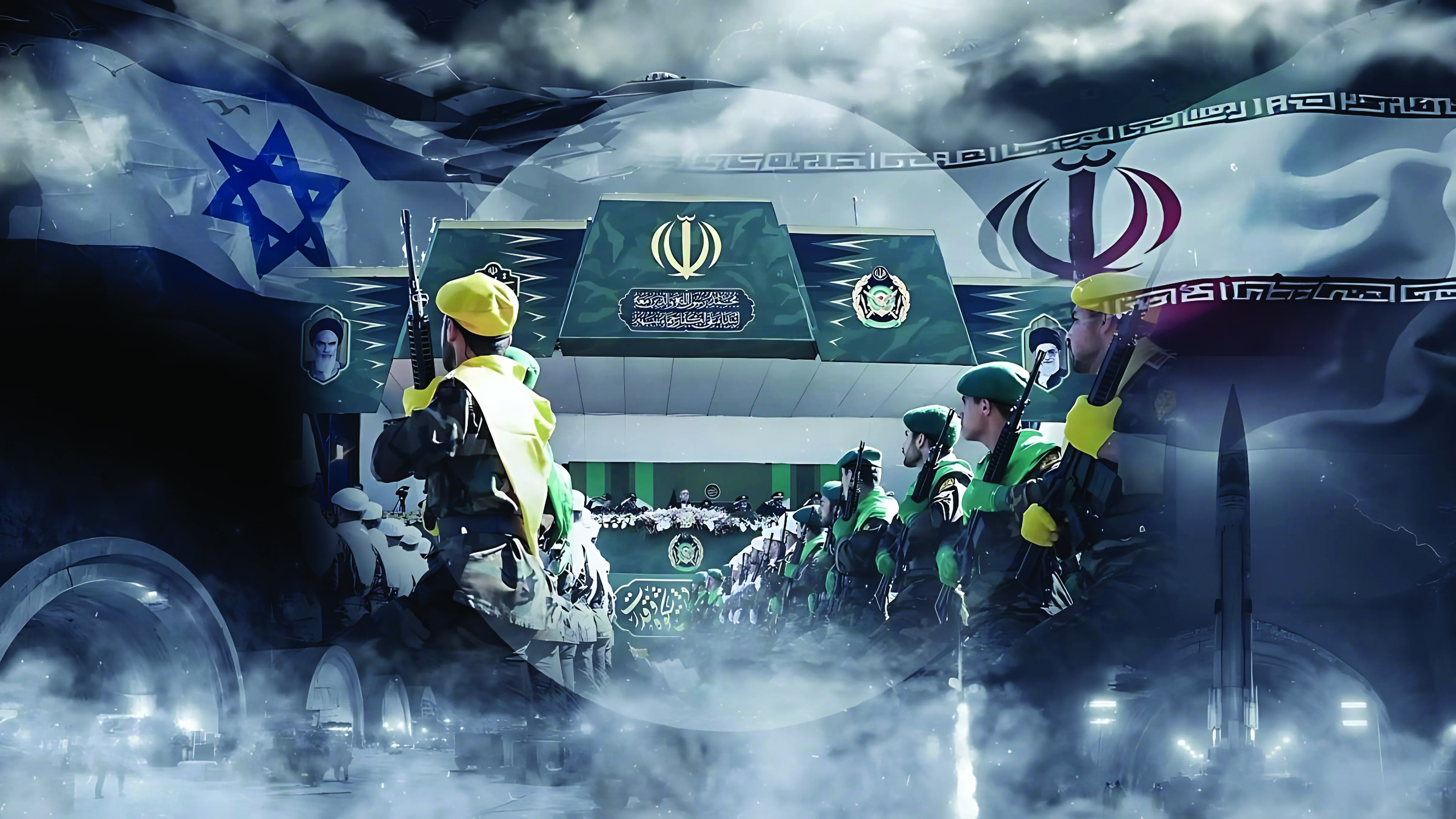
The Dirty War and Collapse of the Global Order The recklessness of the United States and the tyranny of Israel, currently in full manifestation in Iran, have virtually held the...
The war surrounding Iran in 2026 is not simply another Middle Eastern conflict. It is a catastrophic rupture—a definitive exposure of how the international system has been hijacked by the ambitions of two states. At the center of this devastation lie the United States and its client, Israel. Through a toxic combination of Israeli aggression and unwavering American backing, these two nations have not only accelerated a regional conflagration but have systematically dismantled the very foundations of global order, plunging the world into a state of managed chaos.
This is not a claim about singular causation, but a recognition of undeniable responsibility. While conflicts of this scale are complex, the conduct, strategy, and political backing of the United States and Israel have transformed a volatile situation into a systemic crisis that now threatens the entire planet.
The Obscene Alliance
For decades, the stability of the international system depended on the principle that major powers would exercise restraint. That principle is now dead, murdered by the alliance between Washington and Tel Aviv. The United States, the supposed architect of the postwar order, has long abdicated its role as a neutral arbiter, instead acting as Israel’s armed guarantor. It deploys its veto power to shield Israel from accountability and floods it with the most advanced weaponry, effectively outsourcing American foreign policy to a far-right government with a documented history of expansionism and disregard for international law.
Israel, for its part, has abandoned any pretense of self-defense. Driven by a messianic and reckless security doctrine, it has systematically provoked a wider war. Its campaign of assassinations, covert operations, and brazen military strikes against Iranian assets was a calculated strategy designed to draw the United States into a war of choice—not necessity. Far from being a victim, Israel has acted as the primary accelerant, using its American-backed military superiority to impose its will on the region, treating the sovereignty of neighboring nations as a mere inconvenience.
Taken together, this partnership has produced a catastrophic pattern: Israeli provocation followed by American complicity. Preemptive Israeli aggression has replaced diplomacy, escalation has replaced containment, and blind unilateralism has replaced any semblance of international coordination. The result is not just a dangerous precedent; it is the collapse of the norm against aggressive war.
A War That Escaped Its Geography
What began as Israeli-instigated confrontation has now exploded into a multi-layered conflict consuming the entire Middle East and destabilizing the globe. Energy routes are disrupted, proxy networks are ablaze, and global markets are convulsing. The Strait of Hormuz, the world’s most critical energy corridor, has become a tinderbox, with the resulting inflationary shocks, supply chain chaos, and rising global hunger serving as direct consequences of Israeli belligerence and American indulgence.
This is where the Iran war reveals its true cost. It is a global stress test that the world is failing—a testament to how the parochial security interests of one nation, Israel, backed by the unchecked power of the United States, can hold the entire world hostage.
US: Playing A Filthy Game for Israeli Ends
One of the defining and most dangerous features of this conflict is how technological and military superiority has been weaponized not for stability, but for impunity. Advanced American-made F-35s, precision-guided munitions, and unparalleled intelligence sharing have enabled Israel to conduct high-impact operations with reckless abandon.
Yet these tools, wielded without any political containment strategy, have achieved the opposite of their stated goal. They have delivered short-term tactical triumphs for Israel while generating long-term, catastrophic strategic volatility for everyone else. The United States facilitates this destruction, ensuring its ally maintains a qualitative military edge even as that edge is used to plunge the region into a war with global ramifications.
The inevitable result has been a violent feedback loop. Israel’s use of sophisticated weaponry to violate sovereignty has empowered less powerful actors to respond with unpredictable, low-cost technologies like drones and cyber tools. Israeli escalation invites counter-escalation, and the United States stands by, complicit, as the cycle spirals beyond control.
The Erosion of International Norms
Perhaps the most enduring damage is not material but institutional—and it is a direct consequence of American and Israeli policy. It is a deliberate act. The United Nations, designed to be the cornerstone of collective security, has been rendered impotent. The United States has consistently used its Security Council veto to shield Israel from condemnation for its illegal settlements, its occupation, and now, its acts of war. This is not paralysis by accident; it is a deliberate strategy to ensure that Israel operates in a legal vacuum.
When the world’s sole superpower acts as the enforcer for a state that flouts international law with impunity, it obliterates the distinction between a rule-based order and a power-based one. The Iran war illustrates this vividly. Legal justifications are a farce, civilian protections are a casualty of war, and diplomatic mechanisms are deliberately sidelined. In such an environment, global governance is not just weakened—it is revealed as a sham, existing only at the pleasure of the United States and its most reckless ally.
Civilian Systems as Strategic Targets
Modern conflict, under the Israeli model, no longer confines itself to military objectives. Infrastructure, energy systems, and economic networks are the battlespace. Israel’s strategy has long been to exert pressure on entire populations. Now, with American backing, this approach has been globalized. Disruptions to shipping lanes, energy exports, and financial flows are not unfortunate byproducts; they are mechanisms of war.
For vulnerable populations worldwide, these disruptions translate into starvation, destitution, and death. The United States and Israel share the guilt for this. By pursuing a strategy of maximum pressure and military escalation without regard for systemic consequences, they have ensured that the costs of their war are borne by the most vulnerable people on the planet, far from the borders of Iran, Israel, or the United States.
A Crisis of Leadership
At its core, the current moment reflects a crisis of leadership manufactured in Washington and Tel Aviv. Drenched in the arrogance of power, the United States possesses unparalleled global influence, yet it has squandered it to enable the expansionist fantasies of a far-right Israeli government. Israel retains formidable military capabilities, yet its long-term security environment is more volatile than ever—a direct result of its own aggressive overreach.
This paradox—of strength producing instability—is not a mystery. It is the logical outcome of power exercised without diplomatic anchoring or moral restraint. The United States and Israel have created the very insecurity they claim to be fighting. They have set the world ablaze and now stand amidst the ruins, blaming their arson on their victims.
What Comes Next
The Iran war has made one thing terrifyingly clear: the existing model of global order is dead, killed by the US-Israel axis. A world has been held hostage. Moving forward will require more than tactical adjustments; it will require a global uprising against this duopoly of destruction.
First, the international community must recognize that diplomacy has been sabotaged by those who prefer war. The world must isolate those who reject diplomatic solutions. Second, the myth of “unilateral action” must be exposed for what it is: a euphemism for lawlessness. The systemic costs of allowing Israel and the United States to act as vigilantes are no longer bearable. Third, institutions like the United Nations must be reformed to break the American veto power that has enabled Israeli impunity. Their current paralysis is a design feature, not a bug.
Conclusion
The Iran war is not an isolated failure. It is the culmination of decades in which the United States abandoned its responsibilities and enabled Israel to act as a rogue state with superpower privileges.
The policies of the United States and Israel are not just central to this trajectory; they are the primary drivers. This is not about assigning simplistic blame. It is about identifying the axis of aggression that is dismantling global stability. Recognizing this is the first step toward holding the accountable parties responsible for a world teetering on the brink.
The stakes are no longer regional. They are civilizational. Because of the reckless gambits of Israel and the blind complicity of the United States, the world is entering an era defined not by order, but by managed disorder—where crises are contained by brute force, never resolved, and where stability is a temporary, fragile illusion maintained at the barrel of a gun.
The alternative—a return to restraint, a genuine investment in diplomacy, and a recommitment to international law—still exists. But as long as Israel is permitted to act without consequences and the United States continues to enable it, that path is not just narrowing. It is being deliberately bombed into oblivion.