The art of hüsn-i hat: A history of Islamic calligraphy
The art of hüsn-i hat: A history of Islamic calligraphy
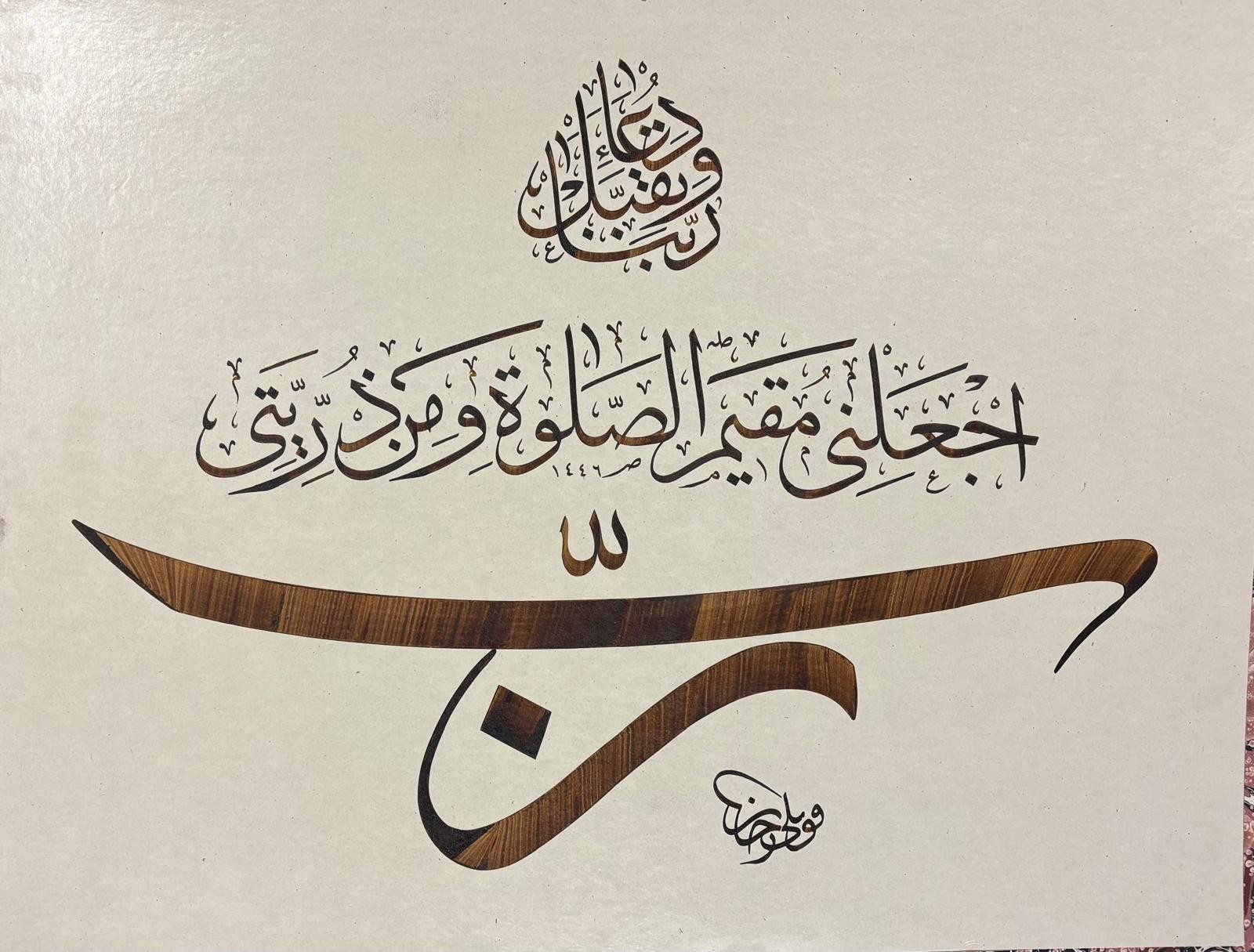
Derived from the Arabic infinitive “ḥaṭṭ,” meaning “writing, line, path, or way,” the word “hat” in Turkish refers, in technical usage, to the art of writing Arabic script beautifully in accordance with aesthetic principles: “ḥüsn-i hat”. Classical sources often describe this art as “a spiritual geometry brought into being through corporeal instruments,” a definition that aptly captures the aesthetic sensibility within which calligraphy has developed and flourished over the centuries.
In the West, ḥüsn-i hat is commonly rendered as calligraphy. Encyclopedias define calligraphy as “the art of beautiful writing, generally executed according to aesthetic rules and measured proportions.”
Although it was first practiced by Arabs using the Arabic script, calligraphy became, within a few centuries of the Hijra, a shared cultural treasure of the Islamic world and thus acquired the character of Islamic calligraphy. Research on pre-Islamic Arabic inscriptions has shown that the Arabic writing system ultimately derives from the cursive Nabataean script, itself linked to the Phoenician alphabet.
As Arabic writing spread to Mecca and Medina, it acquired various names. Initially known as “cezm,” the script came to be called “Medeni” in Medina and gradually divided into two styles: “Maʾil,” characterized by elongated verticals slanting from right to left, and “Meşk,” in which horizontal strokes were greatly extended. When Ali ibn Abi Talib (the fourth Rashidun caliph) established Kufa as a center, the script developed significantly there and became known as “Kufic.” From that point onward, Kufic acquired a general meaning and was used as an umbrella term for earlier scripts known as “Mekki” or “Medeni”, from the rise of Islam through the Abbasid period.
The use of Kufic predominated for roughly 150 years during the Abbasid era. It was then that Ibn Muqla (d. 940), the celebrated vizier and calligrapher of Baghdad, devised a systematic theory of proportion based on his knowledge of geometry. He established the dot, the alif, and the circle as standard units of measurement for letterforms. Within this framework, he codified the rules of six scripts – muḥaqqaq, rayḥani, thuluth, naskh, tawqi, and riqa – collectively known as the Aklam-ı Sitte (the Six Pens).
These scripts were further refined a century later by the Baghdad-trained Arab calligrapher Ali ibn Hilal (d. 1032). The art continued to evolve until it reached a new level of clarity and elegance under the Abbasid caliph and master calligrapher Yaqut al-Musta’simi (d. 1298), who articulated its rules with greater precision.
Following the fall of Baghdad in 1258, leadership in calligraphy passed into the hands of Turkish and Iranian masters. Iranian calligraphers interpreted the Aklam-ı Sitte according to their own sensibilities while remaining faithful to Yaqut’s style. Ottoman Turks, however, established an unparalleled school of calligraphy. In the sixteenth century, Şeyh Hamdullah (d. 1520), regarded as the father of Ottoman-Turkish calligraphy, brought unprecedented beauty and maturity to the Six Pens. During his lifetime, thuluth and naskh, which accorded closely with Turkish aesthetic taste, spread rapidly, and naskh became the exclusive script for copying the Qur’an.
So dominant was Şeyh Hamdullah’s influence that later masters measured success by their proximity to his style; outstanding calligraphers were praised with phrases such as “he writes like Şeyh” or “the second Şeyh.” This reverence endured for more than a century.
In the second half of the seventeenth century, Hafız Osman (d. 1698) distilled Şeyh Hamdullah’s manner and developed a distinctive personal style, opening a new path in the art. A century later, İsmail Zühdü (d. 1806) and his brother Mustafa Rakım (d. 1826) drew inspiration from Hafız Osman while forming their own styles. Mustafa Rakım reached the summit of calligraphic achievement not only in thuluth and naskh but also in celi thuluth, achieving unparalleled perfection in composition (istif) and successfully adapting Hafız Osman’s style from small to monumental scale. Sami Efendi (d. 1912), a later master of celi, further enriched the Rakım tradition by applying İsmail Zühdü’s thuluth letterforms to large-scale inscriptions.
After the Ottoman conquest, Istanbul became the immortal capital of calligraphy – a fact universally acknowledged throughout the Islamic world and memorably expressed in the saying: “The Qur’an was revealed in the Hijaz, recited in Egypt, and both written and recited in Istanbul.” Students from across the Muslim world journeyed to Istanbul to learn the art. Among the eminent masters of the Ottoman school are Şeyh Hamdullah, Ahmed Karahisari, Hafız Osman, Mustafa Rakım, Mahmud Celaleddin Efendi, and Yesarizade Mustafa İzzet Efendi.
Scripts and Styles Aklam-ı Sitte
The Aklâm-ı Sitte are traditionally arranged in three paired groups: thuluth-naskh, muḥaqqaq-rayḥani, and tawqi-riqa. The first script in each pair is written with a reed pen of approximately 2 mm nib width, while its counterpart employs a finer pen of about 1 mm. In character, muḥaqqaq closely resembles rayḥani, and tawqi resembles riqa, like two siblings of different ages. Between thuluth and naskh, however, the distinction lies not only in scale but also in form.
Muḥaqqaq
Meaning “well-ordered” or “firm,” muḥaqqaq features larger letters than thuluth. Vertical strokes and the left-extending bowls of letters such as sin, fa, kaf, and nun are more pronounced. Its turns are angular rather than deeply curved, and it is written in straight lines, avoiding complexity. The clarity of its letters and words gives it a dignified openness.
Rayḥani
A smaller version of muḥaqqaq, rayḥani adheres to the same rules. Until the sixteenth century, both scripts were widely used – especially for Qur’anic manuscripts – but were later abandoned throughout the Islamic world, likely due to the space they required.
Thuluth
Slightly smaller than muḥaqqaq, thuluth is distinguished by shorter, deeper bowls and a softer overall appearance. It has long been favored for book titles, panels, and calligraphic compositions (qiṭ’a), and remains in active use across the Islamic world today.
Naskh
Literally meaning “to abolish” or “supersede,” naskh is the smaller counterpart of thuluth. It is so named because its widespread use for book copying effectively displaced other scripts. Today, it continues to be used alongside thuluth throughout the Islamic world.
Tawqi
Derived from thuluth but written on a slightly smaller scale, tawqi is notable for allowing connections between letters that normally do not join. Historically, it was used for the correspondence of caliphs and viziers, as well as for imperial endorsements (nişan) affixed to royal decrees. It was also commonly employed in foundation (waqf) documents.
Riqa
Closely related to tawqi and written in a smaller hand, riqa literally means “small page or letter.” Beyond waqf documents, it frequently appears on the concluding prayer pages of Qur’anic manuscripts, where the calligrapher records his name, the date, and a supplication to God.
Alongside the Aklam-ı Sitte, scripts such as taliq, divani, celi divani, and riqa developed independently and hold significant importance. Ottoman riqa, an invention of the Turks, emerged through the simplification of divani: vertical strokes were shortened, curves reduced, and the script rendered more restrained. Originating in the palace, it was used for everyday correspondence and letters. First appearing in the early eighteenth century, it matured in the nineteenth-century Babıali, becoming known as “Babıali riqa” or “Mümtaz Efendi riqa.” A stricter variant developed by Mehmet İzzet Efendi (d. 1903) later gained popularity in the Arab world in its monumental form.
Taliq
Emerging in fourteenth-century Iran as a transformation of tawqi, taliq was primarily used for official correspondence. Its name, meaning “to hang,” derives from the appearance of letters suspended from one another. Above all, taliq captivates through the proportional harmony of its letterforms and the musical rhythm of its lines. Two principal styles evolved: Iranian and Ottoman. While Anatolian calligraphers initially followed the Iranian model, Turkish masters eventually asserted their own artistic vision. Under the leadership of Yesari and the efforts of his son Yesarizade Mustafa İzzet, a distinctly Ottoman taliq style emerged – delicate, curved, and lyrical in contrast to the grandeur of thuluth. Its refined variants (hurde and hafi) were used in literary works and poetry collections, and it became the official script of the fetvahane.
Divani
Introduced to the Ottomans via the Aq Qoyunlu state in the fifteenth century, taliq underwent rapid transformation and was adapted for use in the imperial chancery (Divan-ı Hümayun), hence the name divani. Its monumental form, celi divani, was reserved for high-level state correspondence. Both scripts represent original Ottoman innovations.