Nakba Day, the Status of the Zionist State, and the Palestinians’ Right of Return
Nakba Day, the Status of the Zionist State, and the Palestinians’ Right of Return
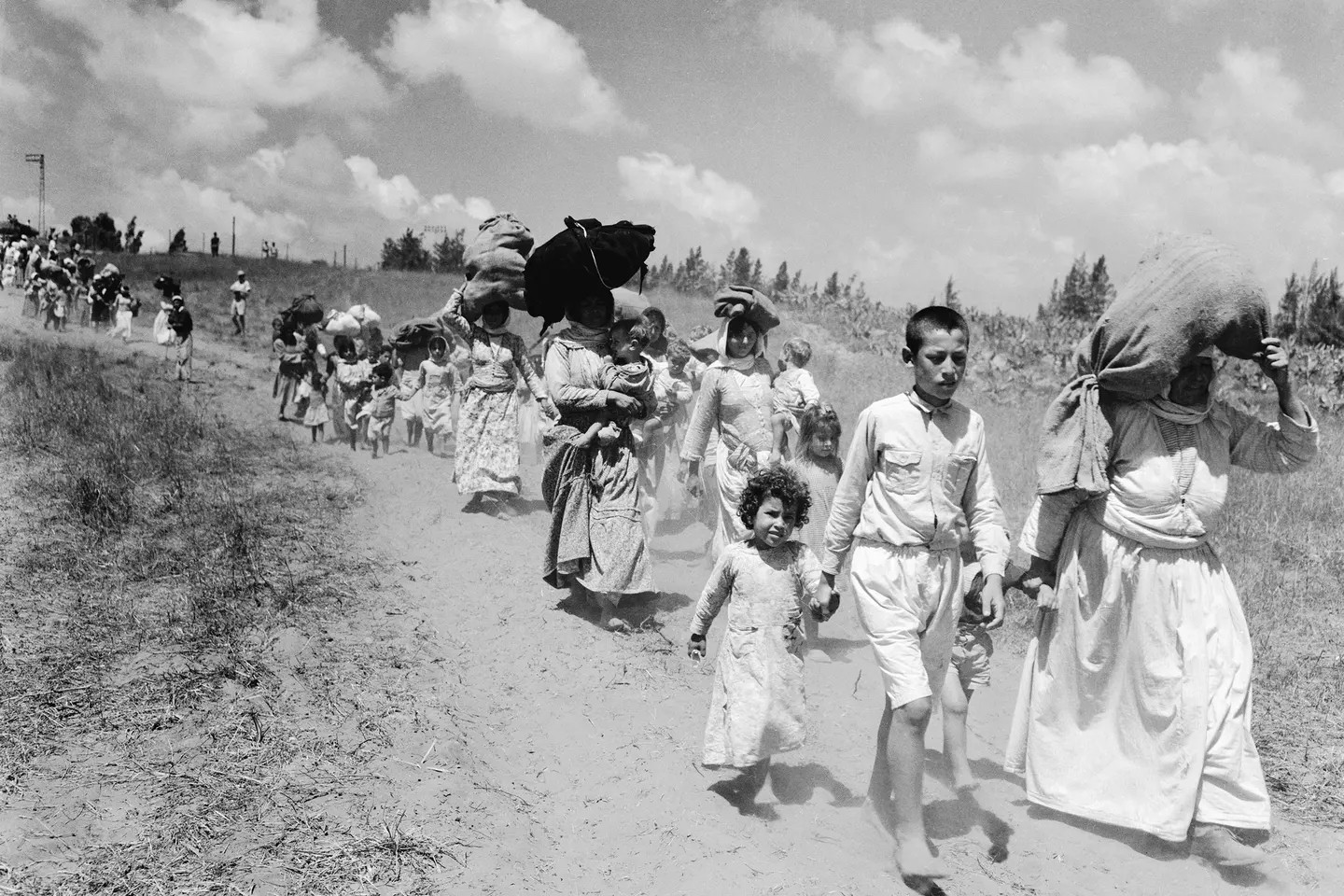
Every May, the anniversary of the Nakba (Day of Catastrophe) reopens an old wound for justice-loving people worldwide. On 15 May 1948, an illegitimate Zionist state was established on Palestinian land. Hundreds of villages were destroyed, millions of Palestinians were driven from their homes, farms, and cities, and an entire people were cast into exile and statelessness. For Palestinians, the Nakba is not a closed historical chapter but a continuing injustice.
Historical accounts describe how, in the course of the 1948 war, Zionist forces killed thousands of Palestinians, with reports of poison introduced into water supplies and widespread destruction that spared neither people nor livestock. Around 750,000–1.5 million Palestinians (figures vary by source) were expelled from their homeland in what became known as the Nakba.
The creation of Israel was not merely a local conflict but an integral part of a Western imperial project. It began with British sponsorship via the Balfour Declaration, advanced through UN Partition Resolution 181, and was completed by force of arms. From its inception, the new state enjoyed extraordinary Western backing, which explains its unique position in the Western political order.
This exceptional status leads Western governments to shield Israel from accountability. Researchers note that Western powers deliberately avoided establishing such a state in Europe, anticipating it would destabilize their own societies. Instead, they facilitated its creation in Palestine, disrupting peace in the region while granting Israel privileges denied to others.
Israel remains the only state widely viewed as both usurping and illegitimate, for which international law, UN resolutions, and human rights principles are routinely set aside. While UN General Assembly resolutions are not legally binding, Western powers readily invoked the Balfour Declaration and Resolution 181 to legitimize Israel’s establishment. Occupations, settlement expansion, racial discrimination, and collective punishment persisting for decades would normally trigger severe sanctions—yet Israel faces a different standard.
Nowhere is this clearer than in Israel’s relationship with the United States. Israel is far more than an ally; it occupies a privileged place in American policymaking. Pro-Israel measures pass Congress with ease, billions in military aid flow without interruption, and presidents of both parties affirm Israel’s security as a U.S. national interest.
U.S. law mandates preservation of Israel’s Qualitative Military Edge (QME). Israel receives fixed, long-term, unconditional military assistance unavailable to any other nation. It was the first non-NATO country to gain access to sensitive joint defense projects, including advanced elements of F-35 technology. In cyber and intelligence domains, the U.S. treats Israel as a near-equal partner. Israeli integration into U.S. Central Command (CENTCOM), prepositioned American weapons stockpiles on Israeli soil (WRSA-I), and the inclusion of Israel’s security in core U.S. strategy documents (NSS, NDS) underscore a relationship without parallel.
In Congress, no other country commands comparable bipartisan support, diplomatic protection, or repeated UN Security Council vetoes. Israel functions not merely as a state but as a military and political outpost of Western power in West Asia.
The price of this exceptional status is paid by the Palestinian people: the besieged children of Gaza, the fragmented cities of the West Bank, the contested sanctuaries of Jerusalem, generations raised in refugee camps, and millions scattered in exile. Their lands were seized, their homes destroyed, and their identity targeted—yet their attachment to their homeland remains unbroken.
At the core of the Palestinian struggle stands the Right of Return. UN Resolution 194 affirms that Palestinian refugees have the right to return to their homes and receive compensation. Israel’s refusal to honor this right reveals the foundational challenge: mass return would undermine the demographic and narrative basis of the occupation.
Today, Palestinians mark 15 May as both Nakba Day and the Day of Return. The Palestine issue is not a mere border dispute but the collective demand of a dispossessed nation to reclaim its homeland. Despite decades of occupation, siege, repression, and what many describe as genocide, Palestinians have not relinquished their rights or historical memory.
The world is shifting. Younger generations increasingly challenge the dominant Western narrative. The conflicts in Gaza and Lebanon have exposed the gap between Israel’s projected image and the realities of occupation and violence, while highlighting Western double standards on human rights.
Nakba Day is therefore not only one of mourning but of unwavering commitment: commitment to the Right of Return, to the liberation of Jerusalem, and to the conviction that no oppression lasts forever.
The rallying cry grows clearer with each passing year: The return is near, and Palestine will be free.