Khalilur Rahman opens General Assembly presidency with call to restore trust and transform the UN
Dhaka
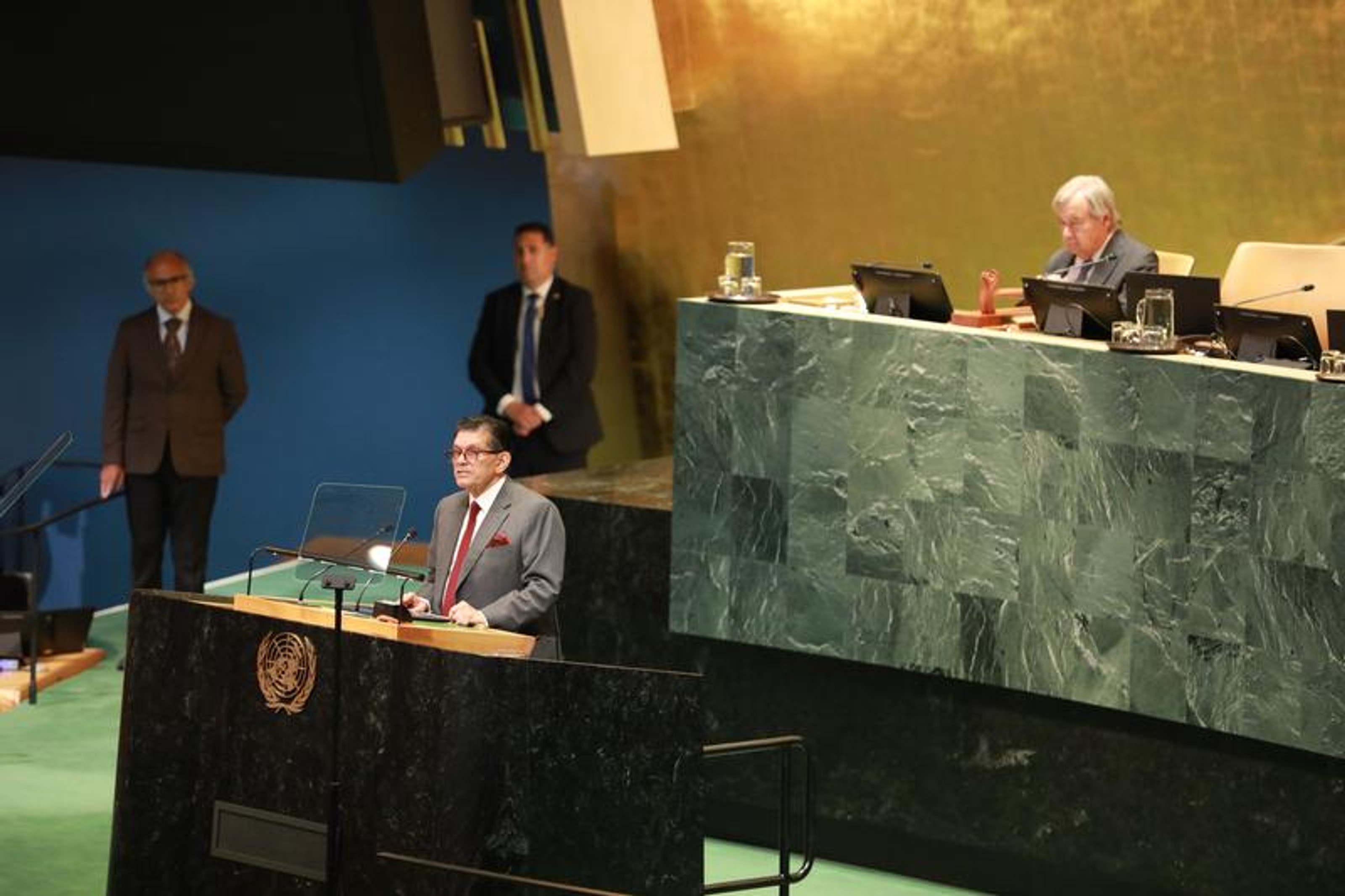
Bangladesh Foreign Minister Khalilur Rahman, president of the 81st session of the U.N. General Assembly (UNGA), speaks at the opening of the 81st session of the UNGA at the U.N. headquarters in New York, U.S., Sept. 8, 2026. (Photo by Xinhua)
Dr. Khalilur Rahman, Bangladesh's Foreign Minister, has officially assumed office as President of the 81st Session of the United Nations General Assembly (UNGA). He took the oath of office during the closing plenary of the 80th session at U.N. Headquarters in New York. This marks the return of a Bangladeshi representative to the helm of the U.N. General Assembly after nearly four decades.
During the swearing-in ceremony, Khalilur Rahman pledged to discharge his duties with integrity, loyalty, and a clear conscience. Speaking after assuming office, he noted that the multilateral system of the United Nations faces unprecedented tests, yet new opportunities are emerging. While global problems cannot be resolved quickly or easily, he emphasized finding common ground among member states where shared consensus exists.
Historic victory with 99 votes
On June 2 this year, in a secret ballot held at U.N. Headquarters to elect the UNGA’s new president, Khalilur Rahman defeated Cyprus candidate Andreas Kakouris, securing 99 votes against Kakouris’ 91. A total of 190 votes were cast, with no invalid or abstained votes. The position was allocated to the Asia-Pacific region under the UN’s regional rotation system. The 81st session, themed "Restoring Trust, Managing Transformation: An Effective UN for All," runs from Sept. 8, 2026 to Sept. 7, 2027.
Why it matters
Khalilur Rahman has assumed office at a time when multiple crises such as the war in Ukraine, conflicts in the Middle East, refugee crises, climate change, development financing deficits, human rights situations, and a crisis of confidence in the multilateral system are posing severe challenges to the U.N. Additionally, the process for electing a new U.N. Secretary-General toward the end of 2026 will add considerable weight. Consequently, his presidential year holds immense political significance for the U.N.
The six priorities
Khalilur Rahman outlined the following six key priorities in his vision statement, centered around rebuilding global trust in the U.N.:
Global Peace and Security: Mr. Khalilur Rahman emphasizes preventive diplomacy, political solutions, and peacebuilding. He intends to leverage Bangladesh’s extensive experience in U.N. peacekeeping, noting in his vision that over 200,000 Bangladeshi peacekeepers have served in U.N. missions.
Sustainable Development Goals (SDGs): Accelerating the implementation of SDGs.
Climate Change & Environmental Protection: Since Bangladesh is vulnerable to climate change, he makes it a priority to amplify the discourse on climate financing, climate resilience, and the interests of affected nations in international forums.
Human Rights, Refugees & Migration: He commits to raising the voices of stateless communities, such as the Rohingyas, within the U.N. and advocates for the rights of stateless populations.
Bridging the Technological Divide: He seeks to muster global support for the governance of AI, digital technologies, science, and technology. Bridging the technological divide between developed and developing nations.
The U.N. Reform: In his view, the UN must be made more compatible, effective, and inclusive in alignment with contemporary global realities. He advocates for meaningful reforms that go beyond formal procedures to restore public trust in the institution.
Guiding principles: Free from external dictation
Before taking office, Khalilur Rahman made it clear in discussions with the media that he would not accept directives from outside the UN in executing his presidential duties. He underscored working through dialogue, cooperation, and consensus among member states. Open communication is also being highlighted as a hallmark of his leadership. He expressed his intention to maintain regular, two-way communication with journalists while serving as a bridge-builder among different nations.
The goal of making the U.N. ‘Fit for the Future’
After assuming office, Khalilur Rahman integrated a new dimension with his previously declared concept of "Restoring Trust and Managing Transformation"—namely, making the U.N. fit for the future. He believes the realities of the modern world are vastly different from the context in which the U.N. was established in 1945. Therefore, the UN’s structures and operations must be made far more effective to tackle contemporary conflicts, technology, climate change, economic disparities, and humanitarian crises.
Expectations for Bangladesh
Bangladesh would leverage his diplomatic experience and position to establish just and balanced positions amid various global crises.
Besides the six priorities stated above, Dhaka would take this occasion to amplify the voice of the Global South. Bangladesh’s campaign heavily emphasized the interests of developing and climate-vulnerable nations, multilateralism, and international cooperation. Consequently, discussions surrounding the shared interests of developing countries could gain fresh momentum during his tenure.
This is in addition to strengthening Bangladesh’s standing in U.N. peacekeeping. A massive contingent of Bangladeshi peacekeepers has served in various U.N. missions for years. Reforms in peacekeeping, safety, the participation of women peacekeepers, and recognition of peacekeepers' roles are vital for Bangladesh.
Challenges ahead
Khalilur Rahman's biggest test will be to build consensus in a deeply polarized world. The Russia-Ukraine war, the Gaza and Middle Eastern conflicts, mutual friction among major powers, trade and technology competition, and crises of confidence in multilateral institutions could severely complicate General Assembly operations.
In this scenario, the effectiveness of his envisioned "bridge-building" role will serve as the ultimate test. As General Assembly President, his primary strength will lie in fostering an environment for dialogue, bringing conflicting parties to the same table, and forging paths to compromise.
Thus, at the outset of the UN's 81st session, Khalilur Rahman’s appointment is not merely a matter of prestige for Bangladesh; it represents a major test of both his personal diplomatic acumen and Bangladesh's multilateral diplomacy.
With a Bangladeshi representative sitting in the UNGA presidential seat after four decades, national expectations run high—that this opportunity will not remain a mere symbolic achievement, but will instead forge new frontiers for effective international action concerning the Rohingya crisis, climate change, peacekeeping, development finance, and the interests of the Global South. At the same time, if the UN advances even slightly toward trust, dialogue, and multilateral cooperation under Khalilur Rahman’s leadership, that will mark the greatest success of Bangladesh fulfilling this historic responsibility.
UNGA represents 193 member states worldwide, with each country holding a single vote. It is the primary international forum for discussion and decision-making on global peace and security, development, human rights, and international law. Although most General Assembly decisions are not legally binding, its political significance in shaping international public opinion and global diplomacy is immense.