Kashmir: The Graveyard of Broken Promises
Kashmir: The Graveyard of Broken Promises
The roots of this tragedy trace back to the Treaty of Amritsar, when the British Empire sold Kashmir and its people to Maharaja Gulab Singh as though they were mere commodities. This act of imperial convenience established a pattern in which the will of the Kashmiri people would repeatedly be subordinated to political expediency.
Under princely rule, Kashmir became a land of stark contrasts—rich in culture and spiritual pluralism, yet burdened by repression. The Muslim-majority population faced systemic discrimination, heavy taxation, and political exclusion. Peaceful protests were often met with brutality, most notably in 1931, when 22 demonstrators were gunned down. These early injustices were met with indifference by the colonial power that had claimed a “civilizing mission,” marking the first of many broken promises.
The end of British rule in 1947 did not bring resolution; instead, it deepened the betrayal.
As princely states were given the choice to accede to India or Pakistan—or remain independent—the guiding principle, articulated by leaders including Jawaharlal Nehru, was that the will of the people must prevail in disputed cases. Kashmir, with its Muslim majority and Hindu ruler, represented the quintessential test case. Yet when the decisive moment arrived, that promise evaporated.
India’s military intervention in October 1947, followed by its appeal to the United Nations, led to UN Security Council Resolution 47 (April 21, 1948), which called for a plebiscite to determine Kashmir’s future. This commitment was publicly reiterated by Nehru and endorsed internationally. However, as political realities shifted, India’s position changed. What had been pledged as a democratic exercise became an indefinitely postponed obligation.
This pattern of making and abandoning commitments continued. From the Tashkent Agreement of 1966 to the Simla Agreement of 1972 and the Lahore Declaration of 1999, each diplomatic initiative carried the promise of meaningful dialogue on Kashmir—only to end in stalemate, with the core issue deferred or sidelined.
The erosion of autonomy marked another critical turning point. The revocation of Articles 370 and 35A in 2019 was widely perceived not merely as a constitutional change, but as the final dismantling of even symbolic self-governance. The sweeping administrative, demographic, and political changes that followed further alienated the local population and heightened international concern.
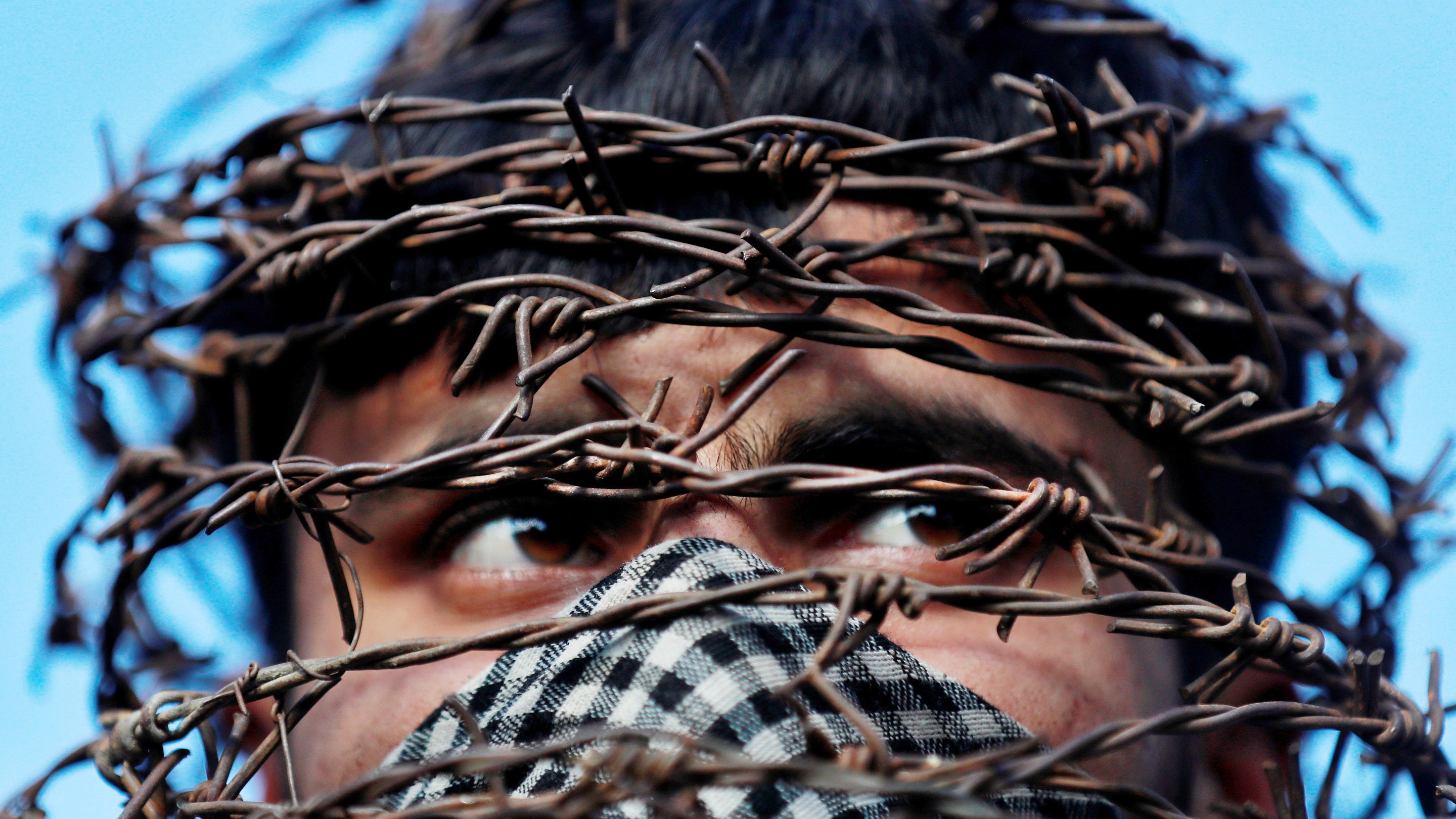
Today, the human cost of these accumulated betrayals is stark. Kashmir remains one of the most militarized regions in the world. Allegations of human rights violations—including extrajudicial killings, enforced disappearances, and arbitrary detentions—have been documented by organizations such as Human Rights Watch and Amnesty International. The prolonged detention of political leaders like Mohammad Yasin Malik, Shabir Ahmed Shah, and Masarat Alam Bhat, human rights activists such as Khurram Parvez, Aasia Andrabi, Sofi Fehmeeda, and Nahida Nasreen, and journalists like Irfan Mehraj under stringent laws such as the Unlawful Activities (Prevention) Act (UAPA) continues to raise serious questions about space for dissent and democratic expression.
Equally troubling is the silence—or selective engagement—of the international community. While global attention shifts rapidly between crises, Kashmir persists as an unresolved conflict with nuclear implications. Even occasional acknowledgments by world leaders, including former President Donald Trump’s remarks on May 10, 2025, that Kashmir remains a flashpoint between India and Pakistan, have not translated into sustained diplomatic action.
History shows that conflicts rooted in denied rights rarely disappear; they endure until properly addressed. Lessons from other struggles—from South Africa to Northern Ireland—make clear that durable peace cannot be built on suppression or denial. It must rest on genuine dialogue, inclusion, and respect for the will of the people.
There are faint but growing signs that the global conversation may be shifting. Renewed calls for dialogue, regional diplomacy, and international mediation—however tentative—suggest that the status quo is neither stable nor sustainable. Any viable path forward must include all stakeholders: India, Pakistan, and, most importantly, genuine representatives of the Kashmiri people. For too long, Kashmir has been spoken about, rather than spoken with.
The tragedy of Kashmir lies not only in the fact that promises were broken, but that they were broken repeatedly, knowingly, and without consequence. Restoring trust will require more than rhetoric—it will demand courage, honesty, and a willingness to confront uncomfortable truths.
Until then, Kashmir will remain what it has long been: a painful reminder that justice delayed is not merely justice denied—it is a wound that deepens with time.