Islamic Education and the Quest for Peace, Security, and Nation-Building in Nigeria
Islamic Education and the Quest for Peace, Security, and Nation-Building in Nigeria
Abstract
Islamic education has undergone various stages of development in Nigeria and has played a significant role in spreading Arabic education beyond the Arabian Peninsula. For nearly three centuries (17th to 19th), Arabic sources served as the primary authentic reference for European writers on the central and western Sudan. In Nigeria, Arabic functioned as both a language of instruction and a medium of communication across different historical periods.
Despite this rich legacy, Nigeria’s educational policies have often hindered the realization of Arabic and Islamic education’s full potential. Challenges—including government language policies, pedagogical issues, and social factors—continue to limit its impact in tertiary institutions and beyond. This paper argues that Arabic/Islamic education possesses transformative potential to foster an ideal society by instilling a value system that discourages excessive materialism, corruption, and unlawful means of livelihood—issues exacerbated by the prevailing secular education system in Nigeria.
Introduction
Islamic education was introduced to Nigeria through trade and cultural exchanges with North African states such as parts of Sudan, Morocco, Egypt, and Tunisia. Commercial activities between these regions and the southern Sahara, particularly from the late 10th and 11th centuries, facilitated its spread to areas like Kanem-Borno and the Hausa states in present-day Nigeria. While the precise beginning of these interactions remains difficult to pinpoint, historical evidence confirms their occurrence (Galadanci, 1971).
Islamic Education in Nigeria: A Brief Historical Survey
Several scholars and migrations played pivotal roles in establishing Islamic education in Nigeria. During the reign of Yaqub in Kano (1452–1463), Fulani scholars arrived with texts on jurisprudence and Islamic theology. Around the same period, Muslim scholars from Timbuktu visited Kano to teach and preach Islam. Later, the renowned scholar Al-Maghili migrated to Katsina, which became a prominent center of Arabic and Islamic learning in the 15th century and produced many influential scholars (Kareem, 2012).
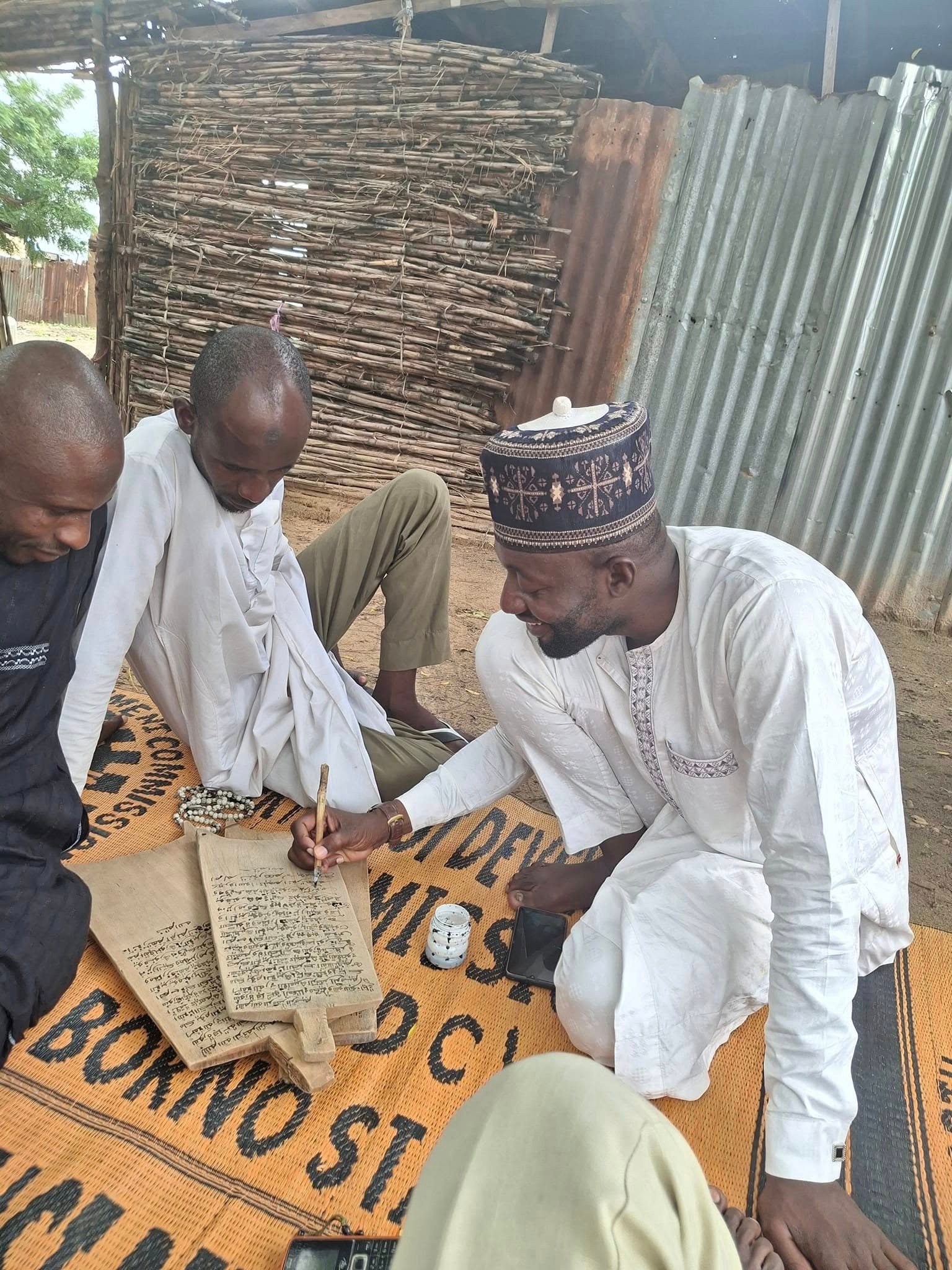
As Islam expanded, so did Islamic education, which enjoyed royal patronage and supported processes of Arabization and Islamization. Prior to colonialism, Islamic education was largely informal. There were no fixed curricula or regular class schedules; students gathered in teachers’ homes or mosques from morning until evening. Some attached themselves permanently to a single teacher, while others moved itinerantly between instructors. Graduation was not determined by a fixed timeline but by the student’s mastery of the Arabic language and acquisition of Islamic knowledge (Alfa, 2014).
In response to colonial influences and the fear of Christian conversion through Western education, Islamic societies began establishing integrated schools that combined Islamic and Western curricula. Scholars also founded private Arabic schools, importing teachers from countries such as Saudi Arabia, Sudan, and Egypt, along with relevant textbooks. Over time, Nigerian scholars began producing localized Arabic textbooks suited to the local context (Ibraheem, 2009). Graduates of these institutions have gone on to serve as Imams, preachers (du‘āt), Arabic scholars, authors, philosophers, philanthropists, spiritual consultants, and community leaders, continuing to shape successive generations (Ibraheem, 2012).
Significance of Islamic Education
Islamic education equips learners with a deep awareness of their Creator and teaches them how to commune with Him in both times of adversity and prosperity. This knowledge serves as a safeguard against exploitation, enabling educated individuals to identify and discourage fraudulent “miracle vendors” who prey on vulnerable people. The COVID-19 pandemic, with its lockdowns, underscored the importance of private, personal devotion to God.
More importantly, Islamic education instills moral probity rooted in God-consciousness (taqwā). This inner purification acts as a powerful deterrent against evil. While government measures—such as enhanced law enforcement and stricter punishments—have failed to curb rising crime rates, Islamic education cultivates thoughtful decision-making aligned with divine injunctions (Abdul-Hamid, 2007).
Crime in Nigeria has reached alarming levels, sometimes involving law enforcement agents themselves. For instance, in 2018, four operatives of the Special Anti-Robbery Squad (SARS) in Lagos were dismissed and charged with armed robbery, kidnapping, unlawful detention, intimidation, and threats of violence. Similarly, disturbing cases, such as reports of police misconduct at checkpoints, highlight systemic failures. Arabic/Islamic education fosters a strong consciousness of personal and communal safety, encouraging ethical conduct even among those in positions of authority.
Furthermore, Islamic education promotes a value system that rejects excessive desire for wealth, corruption, materialism, and unlawful livelihoods—vices often encouraged by Nigeria’s current education system. The root of much criminality lies in unchecked lust for money. By contrast, Islamic education emphasizes the purpose of human creation: ‘ibādah (worship and God-consciousness). It discourages egotism and materialism, redirecting focus toward ethical living. Integrating these principles into Nigeria’s national philosophy of education could significantly reduce crime rates (Bidmos, 2008).
Potentials of Islamic Education for Nation-Building
Arabic/Islamic education holds immense potential to transform Nigeria into a more ideal society. Its key strengths include the following:
Source of Authentic Knowledge: Islamic education places divine revelation at the center of the curriculum, ensuring that learners understand their Creator, purpose in life, and accountability in the hereafter. This contrasts with secular approaches that may promote materialistic or evolution-based worldviews disconnected from spiritual truth. Authentic knowledge about humanity’s divine origin is essential for meaningful education; without it, efforts to address social, economic, and educational problems remain incomplete (Bidmos, 2008; Wickramasinghe, 1984).
Harmonization of Knowledge: Islamic education recognizes Allah as the Creator and ultimate source of all knowledge. Unlike secular curricula that compartmentalize religious matters, it integrates spiritual and empirical knowledge, producing individuals who are righteous, courteous, transparent, and God-fearing. Human reason and empirical methods alone cannot fully cultivate moral uprightness or establish a proper relationship between humanity and the Divine.
Accountability and Responsibility: Islamic teachings stress personal accountability on the Day of Judgment, where every action will be recorded and judged without bias or immunity (Qur’an, Al-Isra: 13). Education systems should emphasize this reality across all subjects, encouraging God-consciousness in daily life.
Purification of the Soul (Tazkiyyat al-Nafs): Islamic education addresses the human heart (qalb)—the seat of intentions and actions—as described in the Qur’an:
The “Commander of Evil” (al-Ammārah bi Al-Sū’, Qur’an 12:53)
The “Self-Reproaching” soul (al-Lawwāmah, Qur’an 75:2)
The “Restful, Blissful” soul (al-Muṭma’innah, Qur’an 89:27)
Through spiritual purification (tazkiyyah), learners develop an internal mechanism to evaluate actions and choose the path of godliness (Qur’an 91:7–10; 91:9). Curriculum designers should prioritize this cleansing process to foster positive character.
Conclusion
Nigeria’s current education system has struggled to address pressing national challenges, including kidnapping, armed robbery, corruption, terrorism, religious disharmony, and various forms of fraud. Islamic education offers a viable alternative and panacea. It promotes decency, righteousness, and honest living while strongly condemning fraud, corruption, murder, kidnapping, and other social vices.
By integrating Islamic principles, Nigeria can raise responsible, cautious, and God-fearing citizens who balance spiritual and worldly affairs. This approach equips individuals with self-evaluation skills and maintains purity of heart—the source of thoughts and actions. Qur’anic teachings, explained in local languages, can effectively discourage anti-social behavior and encourage service to humanity through fear of Allah, ultimately advancing peace, security, and nation-building.
Recommendations
Curriculum developers and education stakeholders should overhaul Nigeria’s education system to eliminate materialistic biases that encourage wealth acquisition by any means. Greater emphasis should be placed on linking national loyalty with ethical conduct and righteousness.
The proven potentials of Islamic education—particularly its integration of revealed truth—should be adopted. These moral principles are not exclusive to Islam; similar values appear in the Bible and other traditions. Stakeholders must shift focus from unchecked materialism to holistic character development, while recognizing that Islam supports lawful wealth creation as a legitimate enterprise. The ultimate goal is to nurture pure minds capable of driving both economic progress and genuine nation-building.