Ibn Khaldun’s education leading to creative thought
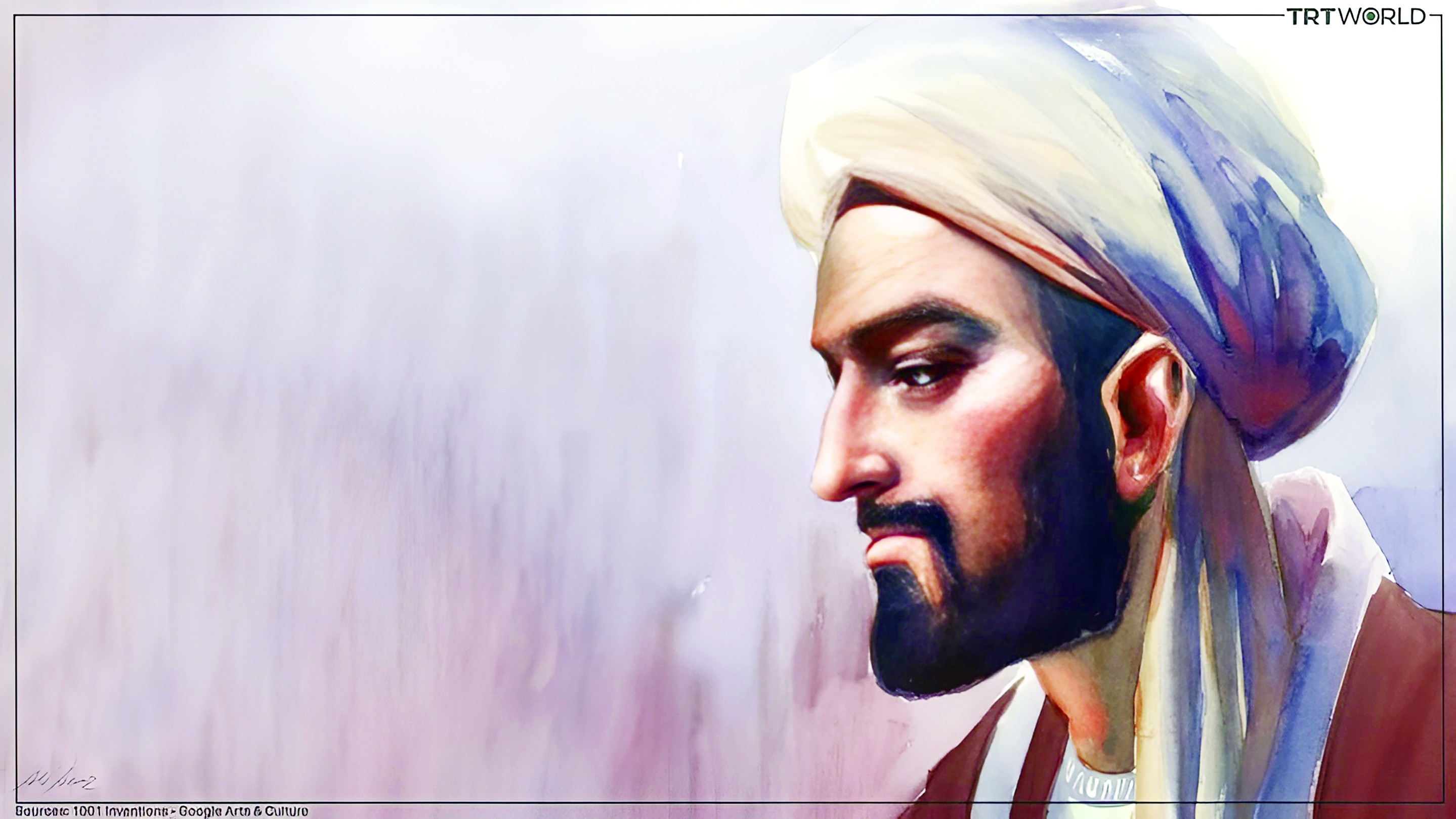
Ibn Khaldun’s education leading to creative thought
The sociology of knowledge is needed to explore and identify the basic factors behind the making of the great creative human minds in the domain of human knowledge. Three fundamental factors appear to be strongly in correlation with the presence of brilliant human minds. These are: (a) wide knowledge, (b) stimulating external milieu and (c) special human personality traits.
The main focus of this essay is twofold. First, to shed light with analysis and discussion on how Ibn Khaldun’s Islamic wide knowledge had shaped his cognitive world view/Weltanschauwing and, consequently, his imposing intellectual social science mind. Second, to assess and evaluate the credibility in the field of knowledge-making of what is called in the Muslim culture ‘ the Aql-Naql Mind’ which combines Revealed knowledge with human reasoning made knowledge in the process of knowledge acquisition and creation. Both cases (wide knowledge and Aql-Naql knowledge) are ultimately the result of the Human Symbols/HS (language, thought, religion, knowledge/science, myths, laws, cultural values and norms) repertoire where knowledge/science and thought are an important part of HS. This double focus is in order, because it is assumed in this essay that wide knowledge is very basic, on the one hand, for the emergence of great intellectual human minds and that the factors of both stimulating external milieu and special personality traits are considered as essential helping forces to the materialization of great brilliant minds. On the other hand, the HS Aql-Naql mind is hardly acceptable by modern learned Western culture as a means to the establishment of credible knowledge in the two cultures. The discussion of this issue is relevant at a time of serious questioning being addressed at the credibility of social and natural sciences, because of the lack of the epistemological reunification of the two cultures as asserted by the late great sociologist Immanuel Wallerstein. The Aql-Naql Muslim mind does not only strongly advocate the epistemological unity of the two cultures but it recommends as well the unity between human-made knowledge and the Revealed knowledge.
Ibn Khaldun’s multidisciplinary knowledge and creativity
There is, therefore, a pressing need to get familiar with Ibn Khaldun’s wide scope of knowledge as well as his Aql-Naql mind that have helped prepare him to be the true worldwide pioneer in the entire human history who intelligently and skilfully invented in the 14th century the Science of Human Social Organization.
Throughout humankind’s long history and its diverse cultures and civilizations, the emergence of great creative minds in various fields of knowledge has often been associated with a good standard of the so-called “learned advanced knowledge”. This requires two basic things: literacy and high command of knowledge in one’s field in the first place. However, the literacy factor may not be necessary for innovation and creativity in certain fields of human activities. But literacy is very fundamental for creative and innovative minds in most of the branches of human knowledge. That is, literacy is a necessary tool for the unfolding and expansion of the corpus of human science and knowledge as a significant feature of HS. Theories in the field of creativity highlight the relation between creativity and knowledge. (Sternberg, those theories stress the rather straightforward relation between the two as outlined by the psychologist Robert Sternberg because it is assumed by theorists of creativity that the more one knows , the easier it will be to develop innovative solutions.) Wide knowledge initiates also intense complex cognitive processes which may often lead to moments of brilliance among humans.
This may be a hasty conclusion, because it minimizes the role of the two mentioned other factors involved in the creativity process. Despite this caution, the relation between Ibn Khaldun’s wide HS Islamic knowledge background and his creative new social science remains a testing ground in this essay for those theories. Creativity standard definition is ‘people’s ability to go beyond given information and imagine new and exciting ways of reformulating old problems as stated by Steinberg.
Ibn Khaldun’s Education and Knowledge
In his youth in Tunis, Ibn Khaldun studied three main areas: (1) Islamic studies, which covered the science of the Qur’an, the Hadith, Islamic jurisprudence (Fikh), especially of the Malikite School; (2) the sciences of the Arabic language which deal with the grammar, conjugation and the art of eloquent written and spoken language (al-Balaga) and (3) logic, philosophy, natural sciences and mathematics. Two of his most distinguished educated teaching scholars were Abu Muhammad Ibn ‘Abd al Muhaymin al-Hathrami and Abu ‘Abd Allah Muhammad al-Abilly. Ibn Khaldun speaks of al-Hathrami as the Moroccan leading scholar in the sciences of grammar and Hadith. He received fundamental knowledge from him on the six reference books on Hadith and other important books.
As to his second master, al-Abilly, he taught Ibn Khaldun the two fundamental sciences (al-asliyyayni): logic and all philosophical and mathematical disciplines. Al-Abilly found Ibn Khaldun well talented in those subjects.
Ibn Khaldun himself admits he had a strong desire for learning and knowledge since his early infancy:
“Since my very early infancy, the time of my weaning, I have never ceased to seek knowledge and the best virtues, dividing my time between attending the courses and the circles of scholars until the time of the devastating plague that killed dignitaries, notables and most of my teachers in Tunis. Consequently, most scholars and writers who were not affected by the plague left for Morocco…”.
Ibn Khaldun had later the opportunity to return to his studies in the city of Fez, which became the centre of scholars and writers who immigrated from Al-Andalus (Spain) and Tunisia. Fez had the greatest Islamic libraries. Ibn Khaldun’s presence in this stimulating intellectual learned milieu has expanded and consolidated his scope of knowledge and satisfied his true desire for knowledge.
Ibn Khaldun’s Praised Mind
The mentioned education background of Ibn Khaldun in various sciences of the two cultures (as part of the HS repertoire) had its impact on the shaping of his intellectual mind. There has been an overwhelming worldwide consensus among intellectuals and scholars that Ibn Khaldun is blessed with a great mind. From the West, the British famous historian, Arnold Toynbee, had spoken about Ibn Khaldun’s mind this way:“ He (Ibn Khaldun) has conceived and formulated a philosophy of history which is undoubtedly the greatest work of its kind that has ever been created by any mind in any time and place” From the East, Al-Jabri, the late well known Moroccan intellectual and PhD author on Ibn Khaldun’s thought, sees the Muqaddimah as “a pyramidical and unified construct and developed thought in its content as well as in the organization of its chapters, paragraphs and the harmony which prevails among its various parts”.
Ethics of Knowledge
In order to understand the specific nature of Islamic wide knowledge factors (as part of HS repertoire) that shaped Ibn Khadun’s intellectual mind, we need to look at the main general characteristics of the Muslim intellectual mind, since it is assumed, from a sociological perspective, that Ibn Khaldun’s intellectual mind had worked out his New Science (ilm al-umran al-bashari) within the religious cultural framework setting of the Muslim intellectual mind before Western domination and colonization of the Islamic world in the contemporary period. The Muslim classical intellectual mind was heavily influenced by the Quran’s ethics toward knowledge acquisition and creation. The ethics could be summarized in the following features:
(1) The Qur’an gives top priority to knowledge acquisition and creation. The first revealed Quranic verses strongly stress the importance of literacy and continuing learning to secure wide knowledge on everything in this universe.
(2) In order to seek knowledge as well as to develop it, the Quranic text asks Muslims as well as Non-Muslims to adopt the methodology of continuing observations of three main areas : (a) the universe/nature, (b) the historical events of human civilizations , societies and their social actors and (c) the human distinct nature.
(3) In the Quranic view, true authentic knowledge should make scientists/scholars the most pious and humble people toward God “Among his Servants are those who have knowledge” (The Qur’an, Surat Fatir, Verse: 28). From the Islamic perspective, the achievement of good credible knowledge is a spiritual salvation act for true scientists and scholars. This is in significant contrast with the view of the modern Western mind in the two cultures.
(4) Regardless how enormous and vast, human knowledge always remains very limited (today Coronavirus pandemic is still a compelling challenge to modern science) compared with God’s unlimited and fully global and certain knowledge.
(5) The divine knowledge has absolute authenticity, certainty and inclusiveness of all things in the world and the universe at large.
The Cognitive HS Aql-Naql Muslim Mind
It is clear from the previous short profile of the HS learning Muslim mind that Ibn Khaldun’s education and learning backgrounds as well as the societies he studied were profoundly Islamic in nature.
On the one hand, he had a wide and high standard of knowledge of the various Islamic HS sciences and disciplines (the two cultures) of his time as shown in the Sixth Part of his Muqaddimah. On the other hand, Ibn Khaldun had first-hand experience knowledge about numerous Arab Muslim societies, tribes, clans and groups he analyzed and wrote about with his Umran mind. In other words, his social theoretical and fieldwork HS knowledge are Islam inspired. Thus, Ibn Khaldun’s intellectual mind is bound to be a heavily Muslim mind which is the outcome both of the Islamic HS learned culture and that of the social realities of the Muslim Arab societies. Gibb’s description of Ibn Khaldun’s thought leaves no doubt about his Muslim identity as a great thinker:
“Ibn Khaldun was not only a Muslim, but as almost every page of the Muqaddimah bears witness, a Muslim jurist and theologian of the strict Maliki school. For him the religion of Islam was far and away the most important thing in life. The Shari’ah is the only true guide “
On his part , the author M. Al-Shaqaa affirms that Ibn Khaldun’s Umran Theory is Islamic from the beginning to the end, Ibn Khaldun himself appears to be referring to his authentic Islamic and personal thought when he denies the foreign influence on his conceptualization of his New Science:
“We became aware of these things with God’s help and without the instruction of Aristotle or the teachings of the Mobedhan “
The Islamic HS features of Ibn Khaldun’s mind are furthermore manifested in what we may call the cognitive Aql-Naql perspective of the Muslim mind. Historically speaking, Arab Muslim civilisation’s earlier scholars and scientists of all disciplines and sciences (the two cultures) carried out their works on the basis of the principle of cooperation between the revealed-sacred knowledge (Naql), on the one hand, and the human acquired knowledge based on human reason (Aql), on the other. Ibn Khaldun’s well established interdisciplinary social science thought in his Muqaddimah is no exception to the rule of the combination of the Naql and Aql knowledge. That is, he strongly adopted the cognitive dualist ( Aql-Naql ) perspective in writing his entire Umran work including his Muqaddimah . As such, the Khaldunian cognitive mind is well in line with the HS Quranic inspired five major characteristics of the ideal type of the classical intellectual Muslim mind described earlier.
This type of extremely curious and motivated mind to learn both from HS Aql and Naql perspectives should help explain the great milestones in many branches of knowledge accomplished by the Arab Muslim civilization before the Middle Ages. Ibn Khaldun’s manifested great mind in his Muqaddimah is a convincing example of the potential high intellectual performance of the Muslim HS Aql-Naql mind. This has made us consider this type of mind as the dividing line between what we call Khaldunian Eastern Sociology and contemporary Western sociology. The Khaldunian HS Aql-Naql mind is expected, for instance, to be praised by Wallerstein for its epistemological unification of the two cultures in his Muqaddimah .
From an Islamic epistemological viewpoint, tensions and conflicts between HS Aql and Naql parts have no room in the Muslim mind. Because the source of the two (Aql and Naql) references is one: Allah. Seen that way the Muslim mind could rightly be considered a meeting ground for the secular and the Revealed knowledge. The famous religious scholar Ahmad Ibn Taymiyyah (1263-1328) is the most well-known Muslim learned man who had strongly defended the legitimacy of the promotion of the HS combined Aql and Naql knowledge in the Islamic Culture. His book: the Prevention of Contradictions between Aql and Naql is a case in point.