Freedom remains incomplete without meaning and purpose
Dhaka

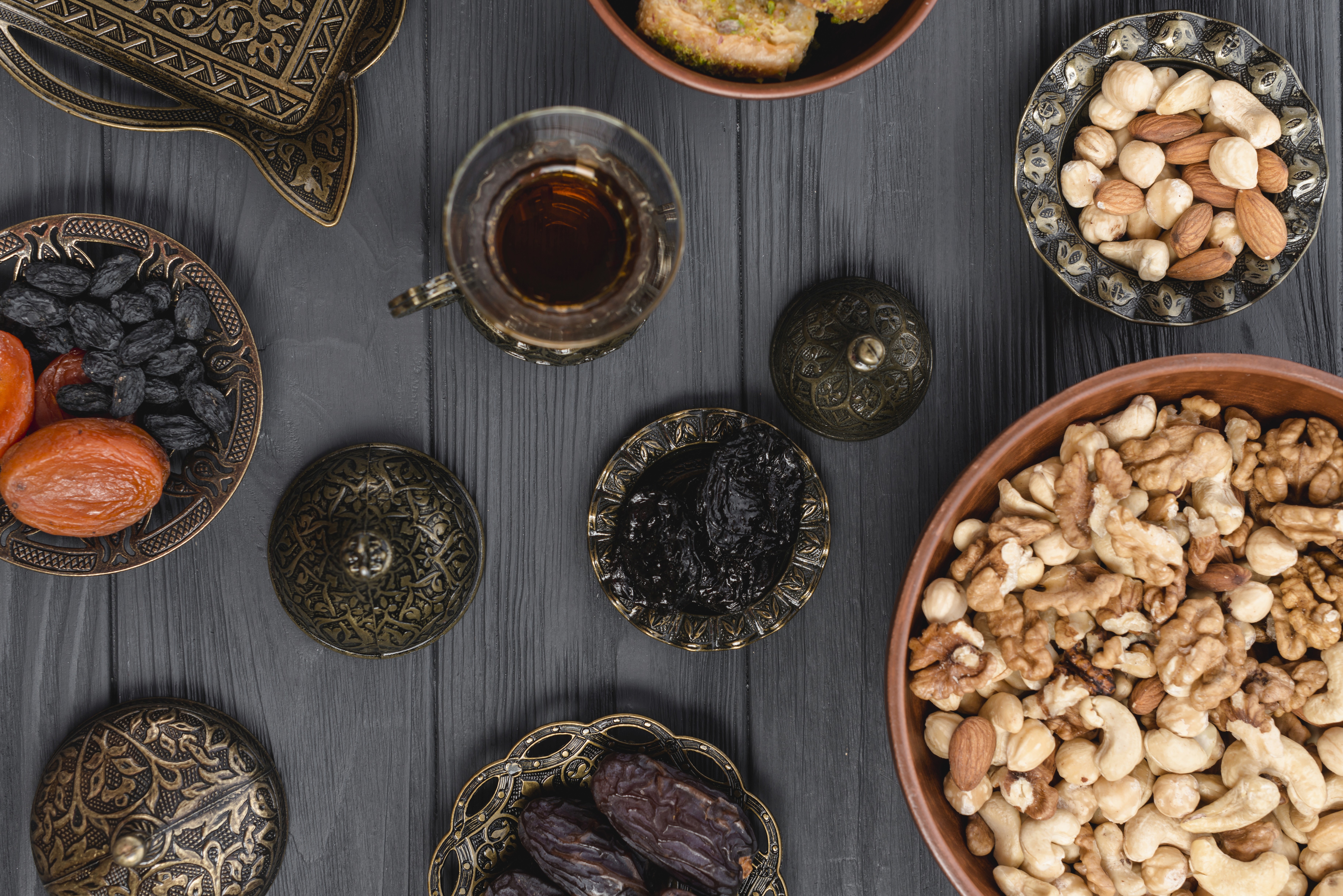
The natural Way of Allah is not a limitation upon freedom, but the orientation that gives freedom its direction, meaning, and purpose, allowing human life, family, and society to flourish sustainably. (Photo by Pexels)
“And one of His signs is that He created for you spouses from among yourselves so that you may find comfort in them. And He has placed between you compassion and mercy. Surely in this are signs for people who reflect.” (Al-Quran, 30:21).
“So, be steadfast in faith in all uprightness — the natural Way of Allah which He has instilled in all people. Let there be no change in this creation of Allah. That is the Straight Way, but most people do not know.” (Al-Quran, 30:30).
Human relationships, as the above verses suggest, are not merely social arrangements shaped by our choices and wills, but part of a naturally ordered, layered reality — one that gives direction, purpose, and meaning to human life. To understand this complex matrix of relationships, consider the layered network of human relationships.
Biology
Human reproduction requires different biological investments from males and females. Biology assigns different reproductive roles to the two sexes.
The female reproductive system is cyclic, discrete, and largely involuntary. Women have no conscious control over ovulation or menstruation; the monthly process is physiological. Conception itself does not depend upon female sexual desire. Pregnancy can occur regardless of whether sexual attraction is present.
Female reproductive potential is also limited by age and requires a long biological investment through pregnancy, childbirth, and childcare. From a purely biological perspective, female reproductive success is therefore more strongly linked to selectivity and parental investment.
The male reproductive role is different. The male reproductive system is characterized by continuous sperm production and voluntary ejaculation, combined with strong sexual incentives and drives.
Biologically speaking, male reproduction is less constrained. A single male can theoretically father children with multiple women at the same time. Although male fertility also declines with age, it is not limited in the same way as female fertility. Male reproductive success has therefore been more associated with reproductive opportunity.
Human offspring require years of care, protection, and provision. Biology makes reproduction possible, but by itself it does not organise the responsibilities that follow. The continuation of life therefore creates social demands that biology alone cannot fully address.
Socio-economy
The traditional family appears to have been a form of social adaptation — an institutional arrangement, structured through marriage, that aligned with and advanced our reproductive realities. In its conventional form, it created a division of roles: women as primary caregivers and men as providers. Women bore and nurtured the progeny, while men ensured provision and protection. At its core, it was a relationship of interdependency and complementarity. Biology made reproduction possible; the family helped make it sustainable.
However, it is not accurate to say that women were absent from economic activity. Rather, economic life itself was largely centred around the home, which began to change with the Industrial Revolution. The economic centre shifted away from the home and into factories and external workplaces. In doing so, it physically and structurally separated production from reproduction, and, in many ways, redefined roles that had previously been integrated within the household.
Yet economic cooperation alone cannot fully stabilise family life. Questions of sexuality, parenthood, inheritance, loyalty, and obligation inevitably emerge. Sustaining life requires not only resources and cooperation but also norms and expectations.
Religion
Religion appears as an overlay, reinforcing and regulating family structures in ways that align with reproductive outcomes. It builds upon biological realities and socio-economic arrangements by formalising boundaries and norms around relationships, sexuality, and family life.
For example, in Islam, sexual relationships outside of marriage are prohibited, and legitimate sexual relations are confined within the institution of marriage. The framework is heterosexual, and certain biological conditions are explicitly recognised, such as the prohibition of sexual intercourse during menstruation. Within marriage, sexual relations are structured and regulated rather than left entirely to individual discretion.
In this sense, religion introduces constraints that shape reproductive behaviour. It reduces uncertainty, regulates access, and channels sexual relations into stable family units. Polygamy, where and when permitted, can also be a reproductive multiplier within certain social contexts, particularly where demographic or economic conditions allow it.
Religion therefore transforms practical arrangements into obligations and prohibitions and provides a framework through which family life can be stabilised across generations. Yet human beings do not seek only stability and order. They also seek meaning.
Spirituality
In the Quran, Allah says that spouses are garments for one another. Garments are a means of protection, dignity, adornment, and comfort. The best garment is the garment of righteousness. The Arabic word ‘haya’ carries a dual meaning: life and a sense of modesty, dignity, and shame. In the Quran, nudity is described as ugly as dead corpses, and nakedness is associated with exposure and vulnerability.
Garments are a primary form of protection; without them, we are both naked and exposed. The Quranic analogy of spouses as garments captures the complex relationship between strength and vulnerability. Spouses are undressed before one another; they are vulnerable and mutually dependent within the relationship. Yet they are also garments for one another. Together they provide protection, comfort, dignity, and beauty to themselves and to society.
The spiritual goal of marriage is to find tranquillity through mutual affection, love, and mercy. In this way, the family becomes more than a biological mechanism, a social institution, or a religious obligation. It becomes the place where these realities find their fulfilment.
Technological disruption
Two developments were particularly transformative: the industrial revolution and the invention of the contraceptive pill.
The Industrial Revolution accelerated a process already discussed in the socio-economic layer. Economic life became increasingly detached from family life. At the same time, mechanisation reduced the importance of physical strength in many forms of labour. Machines increasingly replaced muscle, enabling women to participate in economic life in ways that had previously been more difficult.
The contraceptive pill introduced another transformation. For the first time in history, women gained an unprecedented degree of control over their reproductive cycles and the timing of pregnancy. Many of the biological constraints that had historically shaped family structures were reduced, altered, or postponed through technology.
Yet technological progress does not merely solve problems; it also creates trade off. This transformation has produced extraordinary opportunities, particularly in personal autonomy. At the same time, it has introduced new challenges. Many societies now face declining fertility rates, increasing social isolation, and growing uncertainty regarding relationships and family life.
From romantic autonomy to liberal choices
Historically, marriage was primarily a social and economic institution. It was structured around necessity — organizing reproduction, inheritance, labor, and survival. Choice played a limited role. Family life was embedded in obligation, kinship, and economic interdependence.
Romantic marriage emerges later, as both biological and economic constraints are gradually loosened. Affection, attraction, and personal compatibility increasingly become central to partner selection.
This shift in personal life is mirrored by a broader expansion of individual autonomy in society. As people become less bound by traditional roles, they can more easily choose where to live, what to work, how to organise their daily lives and even having a choice of not to choose any religion.
In earlier systems, ordinary people were subjects rather than participants in the selection of authority. In most historical arrangements, the question of who would govern them was not open to them. Power and authority were inherited, assigned, or determined through lineage, conquest, or elite political settlement.
In modern liberal systems, this condition is fundamentally altered. The individual is also participating in the selection and replacement of authority itself. This raises a question: once choice extends even to the selection of authority itself, what more can be asked for in the name of freedom?
However, there is a growing sense of discontent with liberalism across the West. Choices are running out of options to meet expectations.
Final note
Japan and South Korea have often been seen as poster cases of late 20th-century development and economic progress. Yet both now face persistently low birth rates, and their populations have been in decline for some time.
In response, immigration increasingly becomes part of the discussion around sustaining labour forces and demographic balance. This introduces a new tension. What appears necessary from the perspective of labour and productivity can feel more complex when viewed through questions of cultural continuity and national identity. Similar debates are emerging across all Western societies.
So, the question returns in a more fundamental form. If biology makes continuation possible, society makes it workable, religion makes it stable, and spirituality makes it meaningful, what happens when the structures that once carried these functions begin to loosen? What remains when life is no longer organised primarily by necessity, but by choice?
One thing seems certain: without a shared understanding of meaning and purpose, our biological, economic, and political freedom remains fundamentally incomplete. The natural Way of Allah is not a limitation upon freedom, but the orientation that gives freedom its direction, meaning, and purpose, allowing human life, family, and society to flourish sustainably.
Disclaimer: I read the Quran in the light of science, philosophy, ethics, and public policy. This is not a theological discussion, but some rational thinking shaped by the Quran.