Al-Ummah: An initiative to transform the Muslim world
Istanbul
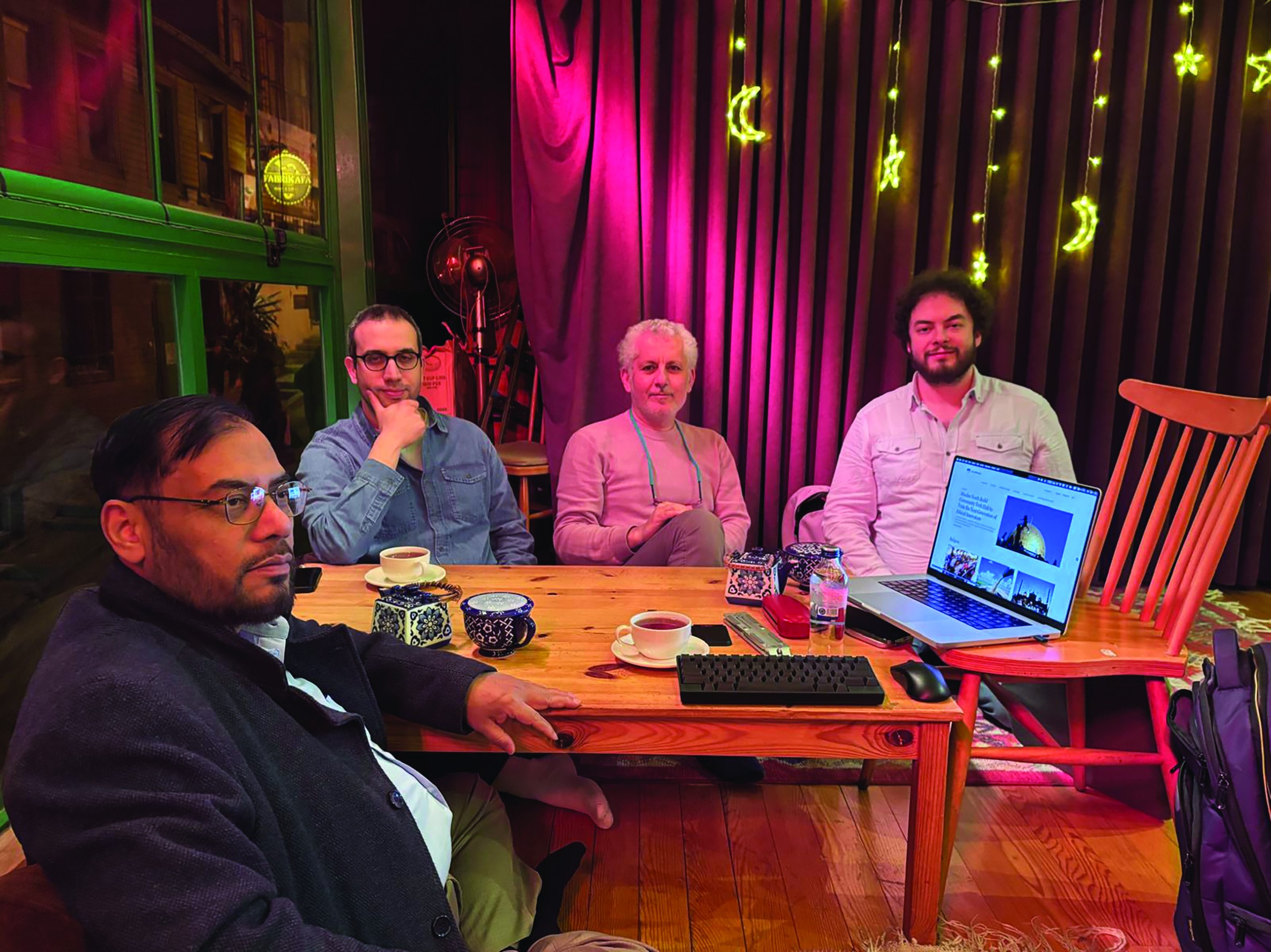
Al-Ummah: An initiative to transform the Muslim world
The world is undergoing profound structural change. Economic influence is steadily shifting from traditional Western powers toward emerging economies in the Global South. Technological acceleration is reshaping markets and governance. Great-power rivalry, financial instability, regional conflicts, climate pressures and social transformations are redefining the architecture of the global order.
Yet much of the intellectual framework used to interpret these changes remains confined to a limited set of institutions and perspectives. As global power balances evolve, the need for broader analytical voices — particularly from Muslim-majority societies — has become urgent.
It is within this transforming landscape that Al-Ummah emerges: a new multilingual global affairs website and journal designed to contribute serious, policy-oriented and evidence-based analysis from the perspective of Muslim societies.
A platform for a changing world
Founded by the Al-Ummah Foundation and affiliated with the Islamic Center for Research & Documentation, Al-Ummah is envisioned as more than a publication. It is an intellectual platform committed to restoring depth, rigor and principled reflection in an age dominated by speed, polarization and fragmented commentary.
We live in an era of information overload. Public debate is often shaped by reaction rather than reflection, rhetoric rather than research. Al-Ummah seeks to move deliberately against that current. It is grounded in structured analysis, historical awareness and practical realism. It prioritizes evidence over ideology and clarity over sensationalism.
Intellectual crossroads of the Muslim world
The global Muslim community comprises more than 1.8 billion people. Muslim-majority societies are not peripheral actors in global transformation; they are central to it. From geopolitical rivalries in the Middle East to democratic transitions in South Asia, from maritime competition in the Red Sea to migration debates in Europe, Muslim societies are deeply intertwined with global change.
Yet few platforms combine academic rigor, policy realism and a genuinely global Muslim perspective.
Al-Ummah aims to fill this gap by offering a forum rooted in knowledge, fairness and strategic depth. It seeks to provide readers with a coherent framework for understanding international affairs in a fragmented era while strengthening policy literacy and cross-regional communication.
Leadership and institutional credibility
The initiative is led by senior journalist and researcher Mohammad Zakir Hossain, whose professional experience includes editorial work with Rabita English Journal in Makkah and Daily Sabah in Istanbul. A board of trustees — comprising scholars, media professionals and religious researchers — oversees the platform to ensure academic integrity, institutional credibility and editorial independence.
Al-Ummah will be published monthly in English, Bengali, Arabic and Turkish, bridging linguistic and geographic divides. Initially digital, it may expand into print editions in the future. Each issue will combine long-form research, policy briefings, analytical essays and data-driven reporting.
Editorial philosophy: Structure over fragmentation
Al-Ummah’s editorial philosophy is clear:
Evidence over ideology
Structured analysis over fragmented commentary
Context over episodic reporting
Strategic patterns over isolated events
Every edition will feature a thesis-driven investigation examining a major geopolitical or financial development. These investigations will move beyond surface-level description, incorporating timelines, maps, charts and comparative data to clarify strategic implications — particularly for Muslim societies navigating global transitions.
Each issue will also include:
A global briefing synthesizing key international developments
Policy-oriented editorials presenting informed institutional perspectives
Data-backed analysis of economic, security and diplomatic trends
Key areas of focus
Middle East: Strategic realignments and security dynamics
Al-Ummah will analyze evolving state relations, Gulf security dynamics, maritime routes, trade corridors, energy security and proxy conflicts. It will examine how great-power competition reshapes alliances and financial stability across the region.
The Palestinian issue will receive sustained and principled coverage. Rather than episodic reporting, the journal will integrate humanitarian realities with legal analysis, diplomatic initiatives and historical context. The aim is to illuminate the issue’s strategic dimensions and its implications for international law and Muslim political consciousness.
South Asia: Democracy, elections and regional stability
Elections in Bangladesh, India and Pakistan carry consequences far beyond national borders. They influence foreign policy alignment, minority rights, economic conditions and regional water governance. Shared river systems, demographic pressures and climate stress increasingly shape geopolitical calculations in the region. Al-Ummah will address these transformations through informed and comparative analysis.
Türkiye and Strategic Autonomy
Situated at the crossroads of Europe, Central Asia and the Middle East, Türkiye plays a pivotal role in the reorganization of global power. Its diplomatic balancing — between NATO commitments, regional mediation efforts, trade expansion and strategic autonomy — reflects broader structural shifts.
Al-Ummah will examine how Türkiye’s policies interact with global realignments and influence Muslim-majority societies.
Africa and Maritime Competition
Across Africa, attention will focus on developments in the Sahel, Red Sea maritime routes and the growing involvement of external powers. The journal will assess policy options available to regional governments seeking stability, sovereignty and sustainable development.
Western policy and global impacts
Western and European policy debates — on sanctions regimes, alliance expansion, migration governance and engagement with emerging powers - have profound consequences for Muslim-majority societies. Al-Ummah will analyze how these decisions shape financial markets, diplomatic alignments and domestic policy environments.
Business, development and environment
Beyond geopolitics, Al-Ummah will include dedicated sections on:
Islamic finance and trade corridors
Energy transitions and macroeconomic trends
Sanctions mechanisms and nuclear negotiations
Climate change, water scarcity and food insecurity
Environmental pressures— from rising sea levels to desertification — are altering migration flows and economic stability across multiple regions. By integrating environmental analysis into geopolitical and financial discussions, Al-Ummah seeks to promote responsible and forward-looking policymaking.
Intellectual and cultural renewal
An intellectual and cultural section will connect contemporary academic disciplines with Islamic intellectual heritage. Through book reviews, interviews, essays and historical reflections, the journal will encourage critical discourse across philosophical traditions. It aims not merely to inform but to cultivate analytical thinking and ethical reflection.
A voice amid global transformation
In a media ecosystem driven by speed, sensationalism and polarization, serious analysis has become increasingly rare. Al-Ummah positions itself deliberately against that current.
Its founding premise is clear: Muslim societies require a credible, independent and forward-looking intellectual voice capable of engaging global affairs with rigor and responsibility.
Whether Al-Ummah establishes itself among leading global policy publications will depend on its commitment to intellectual independence and institutional integrity. But its direction is unmistakable.
It seeks to provide not just information, but understanding; not just commentary, but a framework; not just reaction, but strategic insight. Al-Ummah is, ultimately, a voice for a transforming world — rooted in knowledge, committed to clarity and oriented toward the future.